
Guide
How to Hang Pictures Without Nails
Every no-nail method ranked by rated weight capacity, from 1 lb poster strips to a 35 lb drywall hook.
Top pick: Command Large Picture Hanging Strips (17206)
Hang & Hue
Everything on this wall comes down again. Rated capacities, the walls each method fails on, and the one number that decides which product you need.

Pick your method by rated weight, not by how the packet looks on the shelf. Weigh the framed piece on a kitchen scale, then match it to a product rated above that figure. Adhesive strips top out at 16 lb per frame; a pin-sized drywall hook carries 35 lb; a picture rail carries far more and never touches the wall again after the first install.
That one step — weigh it first — prevents almost every failure people blame on the strips. The second most common cause is the wall itself: textured, wallpapered and freshly painted walls defeat every adhesive product on the market, no matter what the rating says.
Figures are the manufacturers' own published ratings, not our estimates. Sources are listed at the foot of this page.
Every damage-free hanging decision reduces to one number. Weigh the piece with its frame, glass and backing board on — a kitchen scale is accurate enough — and read across:
| Framed weight | What to use | Wall damage | Where to read more |
|---|---|---|---|
| Under 1 lb (unframed poster) | Command Poster Strips | None | Peel-and-stick options |
| 1-4 lb | Command Small or Medium Picture Hanging Strips | None | Best Command strips |
| 4-16 lb | Command Large strips (up to four sets), or VELCRO HANGables | None | Best picture hanging strips |
| 16-35 lb | OOK Monkey Hook or similar small-hole drywall hook | One pin hole | No-drill hanging kits |
| Over 35 lb | Picture rail, or a no-stud hanger plate | A row of screw holes, or several pin holes | Heavy mirrors |
The gap people fall into is between 16 and 35 lb. That covers most 24x36 poster frames with real glass, most framed mirrors and almost every canvas over about 30 inches. Adhesive will not hold it; you need a hook that goes into the board. A Monkey Hook leaves a hole roughly the diameter of a pin, which filler covers in one pass — that is a different order of damage from a wall anchor.
Adhesive strips bond to a smooth, sound, fully cured surface. Four wall types break that assumption, and no strip on the market works around them:
Hang the center of the artwork 57 inches from the floor. That is the gallery and museum standard, it approximates average eye level, and it works in almost every room. Measure to the middle of the piece, never to the hook and never to the top of the frame.
Two exceptions worth knowing. Over furniture, the bottom edge of the frame sits 6 to 8 inches above the sofa back or table top — that gap reads as a relationship rather than two unrelated objects. And in a room where people are mostly seated, a dining room or a study, dropping a couple of inches below 57 lines the work up with a seated eye. The full height guide has the numbers for every situation.
Adhesive strips come off cleanly only if you pull the tab straight down, slowly, parallel to the wall, and keep pulling until the strip releases on its own. Every failure story involves pulling outward, or pulling fast, or giving up halfway and picking at it.
If the tab has disappeared behind the frame, warm the strip with a hairdryer for twenty seconds first — it softens the adhesive enough to shear rather than tear. The removal guide covers the stuck-tab case step by step.
If you know the weight and the wall, go straight to the product roundup that fits. If you are still deciding what to hang, the frame sizes chart sizes the piece and the gallery wall layout guide handles more than one frame at a time. Renting a small place? Wall art for small apartments starts from the constraint rather than the decor.
Weigh the framed piece first, then match it to a product rated above that weight. Under 4 lb, adhesive picture hanging strips work. Between 4 and 16 lb, use large strips in multiple sets. Between 16 and 35 lb, use a small-hole drywall hook such as a Monkey Hook, which leaves a pin-sized hole. Above that, use a picture rail or a no-stud hanger plate.
Adhesive strips leave no mark on a smooth, cured, painted wall when removed correctly: pull the tab straight down, slowly, parallel to the wall. They are not suitable for textured walls, wallpaper or paint less than about a month old, where they lift the surface instead of releasing from it.
3M publishes 1 lb per set for Small Picture Hanging Strips, 3 lb per set for Medium and 4 lb per set for Large. A single frame can carry up to 16 lb using four sets of large strips. Command Poster Strips are rated 1 lb and are for unframed paper only.
None of them reliably. Adhesive needs a smooth surface to reach its rated bond area, and a textured finish gives it only the high points. Use a picture ledge, a picture rail or a small-hole drywall hook on a textured wall instead.
For anything under 35 lb on standard half-inch drywall you do not need a stud at all. A Monkey Hook or similar threaded drywall hook carries that load on hollow board. Heavier pieces need a no-stud hanger plate that spreads the load across several pins, or a picture rail fixed along the top of the wall.
Center the artwork 57 inches from the floor. That is the standard used in galleries and museums and it approximates average eye level. Over a sofa or a table, leave 6 to 8 inches between the top of the furniture and the bottom of the frame.
Rated weight capacities for strips, hooks and no-drill hangers — plus the wall types that defeat each one.
Disclosure: Hang & Hue earns commission from qualifying purchases made through the links on this page, at no extra cost to you. As an Amazon Associate we earn from qualifying purchases. It does not change which products we recommend or the order they appear in — read our editorial policy and full affiliate disclosure.
Guide
Every no-nail method ranked by rated weight capacity, from 1 lb poster strips to a 35 lb drywall hook.
Top pick: Command Large Picture Hanging Strips (17206)
Best overall
Strip-by-strip weight ratings mapped to the frame sizes each one suits, from a 5x7 photo to a 24x36 poster frame.
Top pick: Command Large Picture Hanging Strips (17206)
Best Command strip
All eight Command picture-hanging products with 3M's published ratings and the frames each one actually suits.
Top pick: Command Large Picture Hanging Strips (17206)
Best damage-free hook
Adhesive hooks from 3 lb to 7.5 lb, which frame backs each one suits, and when a hook beats a strip.
Top pick: Command Jumbo Hook (17004)
Best above 16 lb
Drywall hooks at 35 lb, no-stud plates at 200 lb, and rail systems — with the wall damage each one actually causes.
Top pick: OOK Monkey Hook Drywall Picture Hanger
Comparison
Rated weights, reusability and how proud the frame sits — the four axes that actually separate the two systems.
Top pick: Command Large Picture Hanging Strips (17206)
Comparison
Weight ceilings, install cost and what happens the third time you rearrange the wall.
Top pick: STAS Cliprail Picture Hanging System Set

Guide
Why adhesive fails on orange peel, knockdown and popcorn — and the three fixings that hold on a textured wall.
Top pick: OOK Monkey Hook Drywall Picture Hanger

Guide
Brick clips, the fitment measurement that decides whether they work, and what to do on painted or irregular brick.
Top pick: KOLAKO Brick Clips

Guide
Why adhesive is out at mirror weights, the no-stud plates rated 100-200 lb, and when to lean it instead.
Top pick: Hillman No Stud Drywall Metal Picture Hanger (122370)
Guide
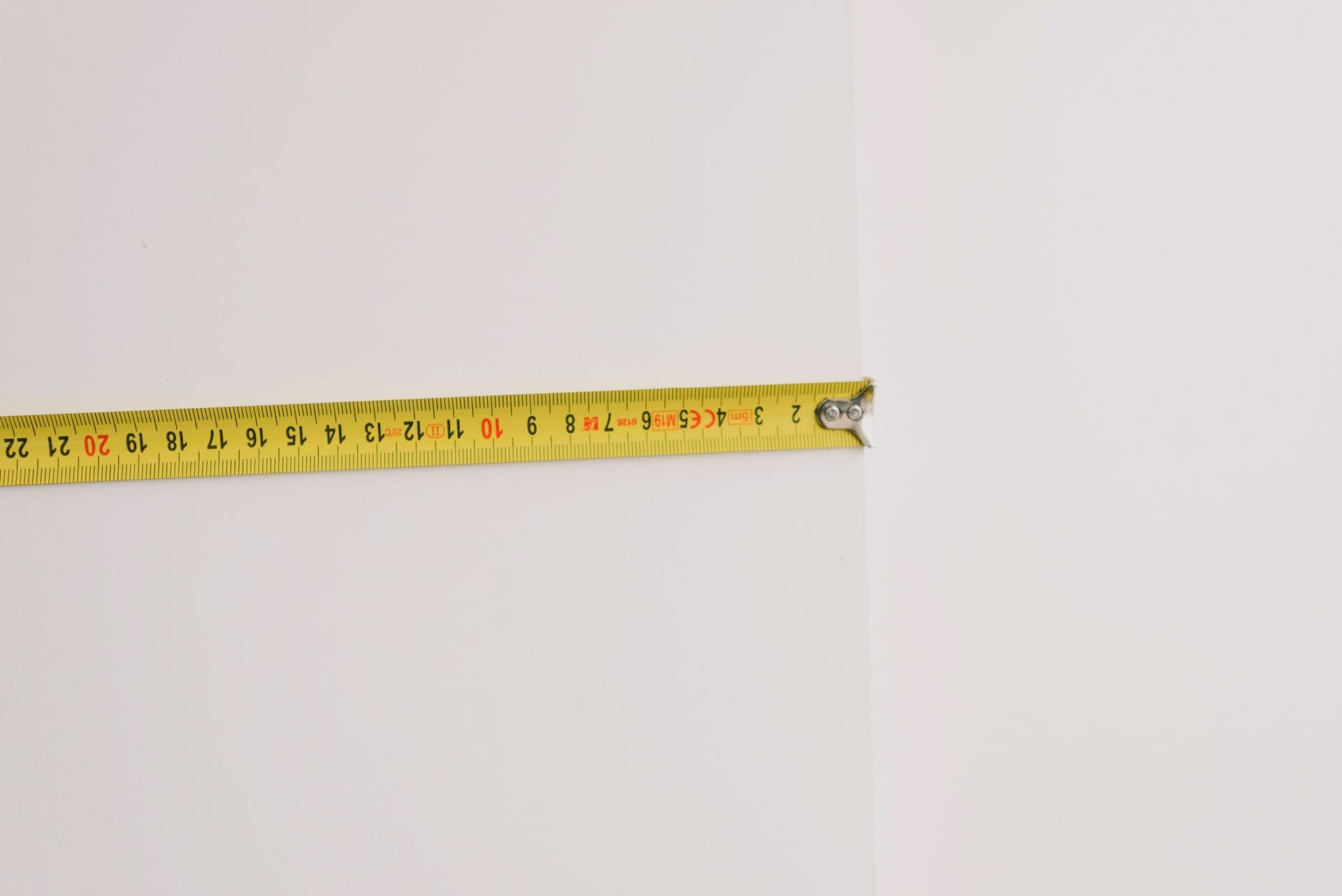
The 57-inch gallery standard, the hook-position arithmetic, and the exceptions for sofas, beds, dining rooms and stairs.
Top pick: Command Large Picture Hanging Strips (17206)

Guide
The correct removal technique, what to do when the tab breaks or hides, and how to repair lifted paint.
Top pick: Command Small, Medium and Large Refill Strips (17200CLR)