Guide
Gallery Wall Layouts and Spacing
The 2-3 inch gap rule, the 57 inch group center, and how to size the whole arrangement to the furniture below it.
Top pick: Americanflat Gallery Wall Frame Set
Hang & Hue
The arrangement is a measuring problem, not a taste problem. Here are the spacings, the sizes and the templates that make it come out right the first time.

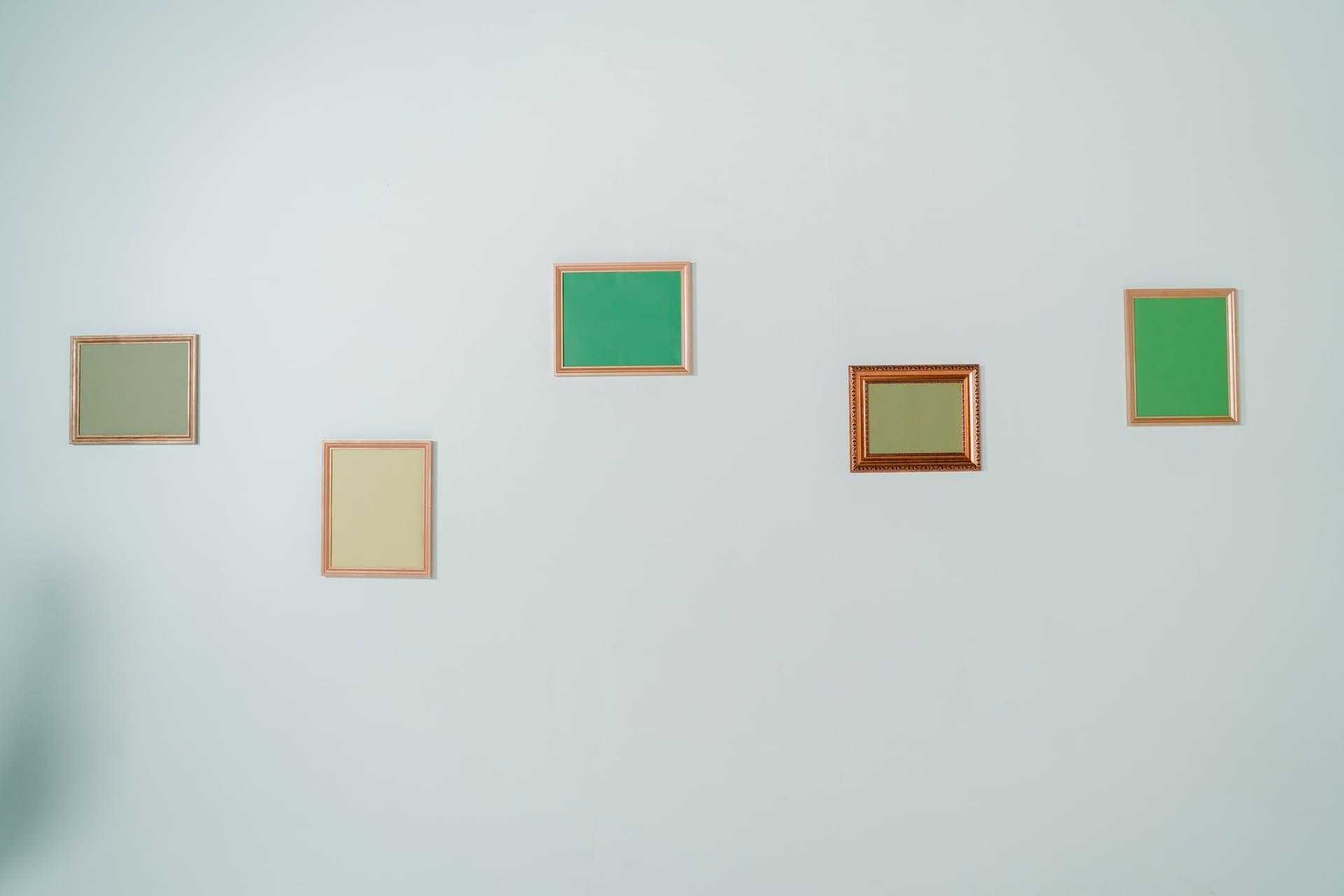
Leave 2 to 3 inches between frames, center the whole arrangement at 57 inches, and make it two-thirds to three-quarters as wide as the furniture beneath it. Those three numbers are what separate a gallery wall that looks deliberate from one that looks like frames landed at random.
Everything else — matching frames or mixed, grid or salon-style, six pieces or nine — is preference. The spacing is not. Uneven gaps are the single most visible error, and they are the easiest to prevent.
Spacing and sizing conventions are the ones used consistently across framing retailers and galleries; hanging heights follow the gallery standard.
| Measurement | Use | Why it matters |
|---|---|---|
| 2-3 in between frames | Identical on every gap, horizontal and vertical | The eye reads consistent negative space as a single object. Variable gaps read as a mistake, even to someone who could not say why. |
| 57 in to the center | The center of the arrangement as a whole | The gallery standard, at roughly average eye level. Individual frames sit above and below it; only the group's center matters. |
| 6-8 in above furniture | Sofa back or console top to the bottom frame edge | Closer and it crowds; further and the art floats away from the furniture and stops belonging to it. |
| Two-thirds to three-quarters | Arrangement width as a fraction of the furniture width | An 84 in sofa wants roughly 56-63 in of art. Undersized art above a large sofa is the most common sizing error there is. |
Do the arithmetic before you buy anything. Three 16x20 frames at 3 inch gaps come to 54 inches wide, which suits a sofa of about 72 to 80 inches. Five 11x14 frames in a row come to 65 inches. Knowing the target width turns frame shopping from browsing into a specification. The gallery-wall frame sizing guide has the combinations worked out.
There are two families and most people are happier once they have picked one and committed.
The full grid-versus-salon comparison covers which to choose for a given wall, and whether the frames have to match answers the question everyone actually has.
A gallery wall is the one place where damage-free hanging genuinely wins on merit rather than on necessity: a nine-frame arrangement is eighteen or more nail holes, and adhesive strips are also repositionable while you are still fine-tuning.
The weight rules are the same as anywhere else. Each frame must come in under the rating of the strips carrying it — 3 lb per set for Command Medium, 4 lb per set for Large, up to 16 lb per frame with four sets. Gallery-wall frames are usually 11x14 or smaller with acrylic rather than glass glazing, so most land comfortably inside that. The step-by-step version is here, and the strip roundup covers which ones to buy.
Two routes. A matched set arrives in coordinated sizes and finishes, often with a paper layout template in the box — the fastest path from empty wall to finished wall, and what most people should buy. The frame set roundup covers the sets worth buying.
Or build it up piece by piece from standard sizes, which costs less and lets the wall grow. That only works if you fix the frame finish and the mat color first and stick to them; a gallery wall assembled from whatever was on offer reads as clutter. The general frame roundup has the lines that stay consistent between orders.
A third option that avoids the wall entirely: a picture ledge. One shelf, two screws, and the arrangement can be changed weekly without touching the wall again. For a rental, it is frequently the right answer.
Leave 2 to 3 inches between frames, and keep that gap identical on every side. Use 2 inches for small frames and 3 inches for larger ones. Consistent spacing is what makes a group of frames read as one deliberate arrangement rather than several separate objects.
No, but something has to. Mixed frames work when one element is held constant across the whole wall: the same frame color with different widths, or different frames with the same white mat, or one consistent subject. Change everything at once and the wall reads as clutter rather than a collection.
Cut a paper template to each frame's outer size, mark where its hanging hardware sits, and tape the whole arrangement to the wall first. Adjust on paper until the spacing is even, then hang through the marks. This removes every irreversible decision from the process.
Work out the total width first: two-thirds to three-quarters of the furniture below it. Choose a grid of identical frames or a salon-style cluster around one anchor piece. Keep 2 to 3 inches between every frame, and center the whole arrangement 57 inches from the floor.
Weigh each framed piece and match it to the strip rating: 3 lb per set for Command Medium, 4 lb per set for Large, up to 16 lb per frame using four sets. Hang the anchor piece first, work outward, and press each frame firmly for 30 seconds against the wall to seat the adhesive.
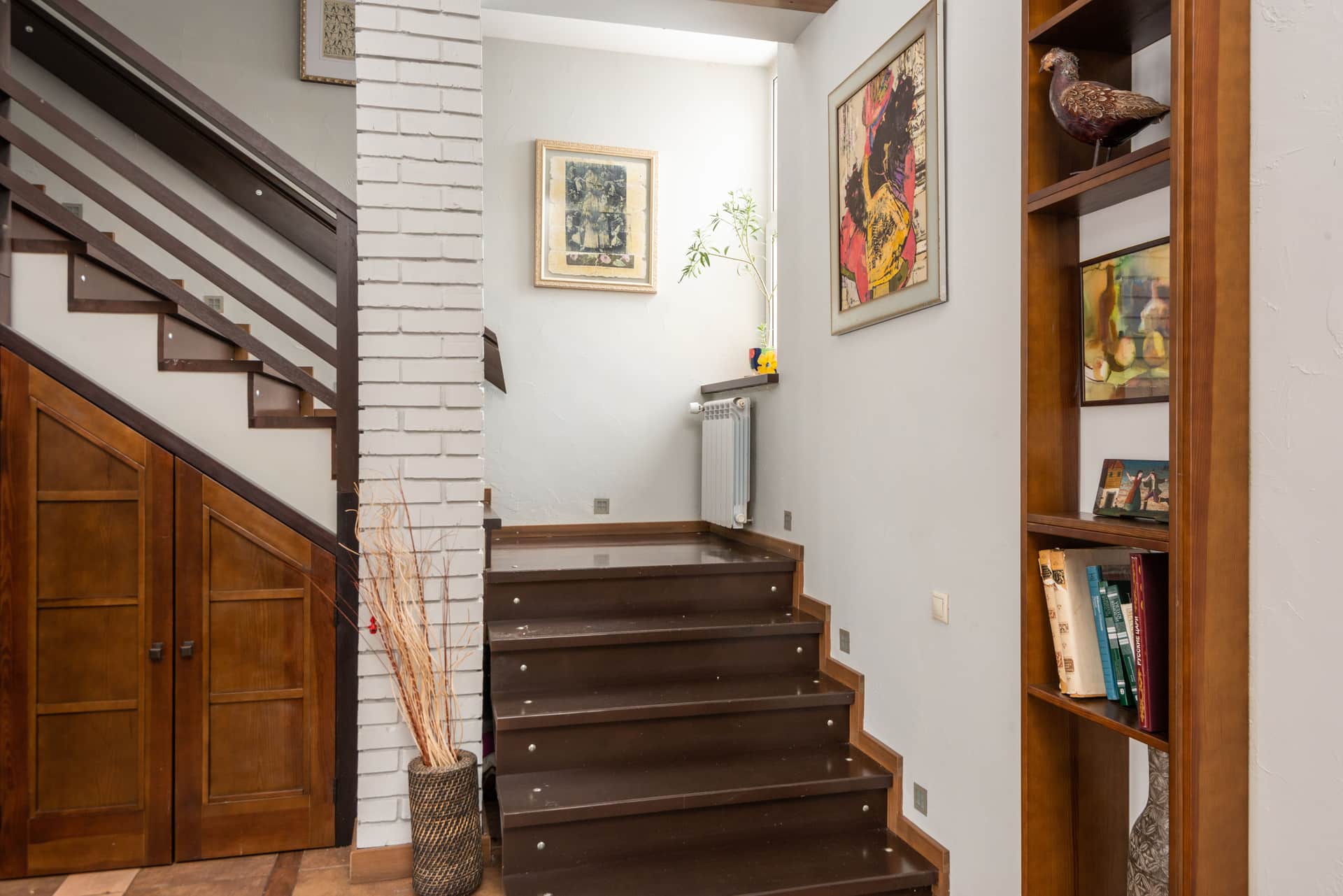
Follow the pitch of the staircase rather than the floor. Mark a guide line parallel to the handrail, then center each frame on that line at consistent spacing. Hanging on stairs is awkward and repositioning is difficult, so use a picture ledge or a small-hole hook rather than adhesive.
To-scale layouts for 3, 5, 7 and 9 frames, the 2-3 inch spacing rule, and frame sets that arrive matched.
Disclosure: Hang & Hue earns commission from qualifying purchases made through the links on this page, at no extra cost to you. As an Amazon Associate we earn from qualifying purchases. It does not change which products we recommend or the order they appear in — read our editorial policy and full affiliate disclosure.
Guide
The 2-3 inch gap rule, the 57 inch group center, and how to size the whole arrangement to the furniture below it.
Top pick: Americanflat Gallery Wall Frame Set

Guide
To-scale layouts for 3, 5, 6, 7 and 9 frames with all dimensions labeled — the page no competitor publishes.
Top pick: upsimples Gallery Wall Frame Set

Best frame set
Matched and mixed-size sets compared on composition, glazing, mats and whether a layout template is included.
Top pick: Americanflat Gallery Wall Frame Set

Best picture ledge
Ledges compared on length, lip depth and mounting — the two-screw alternative to hanging a whole gallery wall.
Top pick: Kate and Laurel Levie Wood Floating Picture Ledge

Comparison
The four variables on a gallery wall, how many you can change at once, and why mixed walls usually fail.
Top pick: Americanflat Gallery Wall Frame Set

Comparison
Grid or salon-style: difficulty, forgiveness, which rooms each suits, and how each one behaves when you add a frame later.
Top pick: upsimples Gallery Wall Frame Set

Guide
Strip ratings per frame size, the anchor-outward hanging order, and the curing step everybody skips.
Top pick: Command Small and Medium Picture Hanging Strips Value Pack (17203)
Guide
Finding the stair pitch guide line, measuring height from each tread, and why adhesive is the wrong fixing on stairs.
Top pick: OOK Monkey Hook Drywall Picture Hanger
Guide
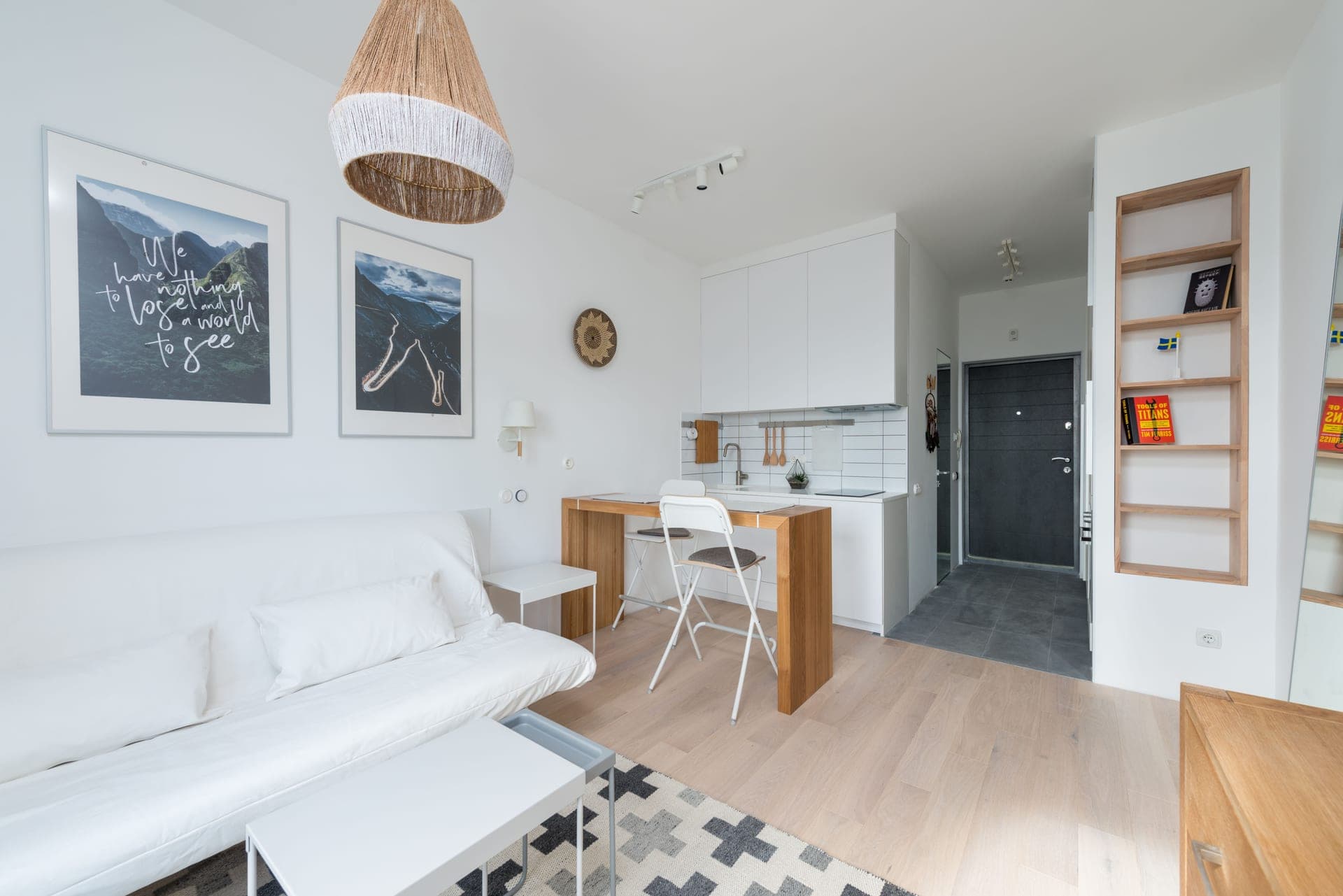
Vertical layouts, tighter spacing, which wall to use, and why one big piece sometimes beats nine small ones.
Top pick: upsimples Gallery Wall Frame Set