How High to Hang Art
One number covers almost every wall in the house. Here it is, plus the four situations where it does not apply.
By Janet H. · Published
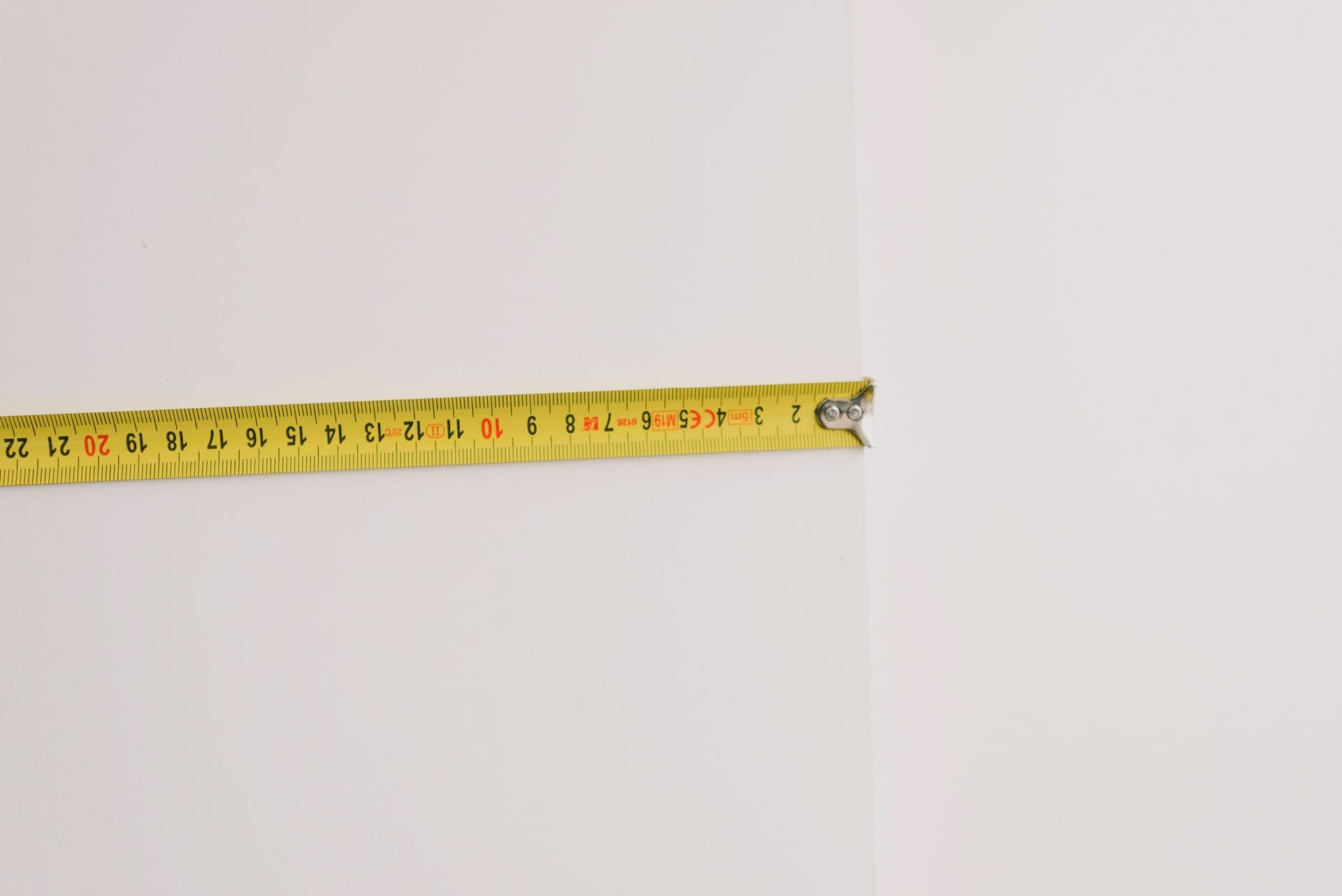
Hang the center of the artwork 57 inches from the floor. That is the standard used in galleries and museums, it approximates average adult eye level, and it works in almost every room. Measure to the middle of the piece — never to the hook, and never to the top of the frame.
Most guidance quotes a 57 to 60 inch band. Pick 57 and use it everywhere: consistency across a home does more for how considered it looks than any individual height decision.
Disclosure: Hang & Hue earns commission from qualifying purchases made through the links on this page, at no extra cost to you. As an Amazon Associate we earn from qualifying purchases. It does not change which products we recommend or the order they appear in — read our editorial policy and full affiliate disclosure.
Quick picks
Tap any row to jump to the full write-up.
| # | Product | Best for | Price |
|---|---|---|---|
| 1 |  Command Large Picture Hanging Strips (17206) Sits flat with no wire drop to calculate — the center of the frame is simply the center of the art, so the height arithmetic gets much simpler. | Best for getting it right first time | |
| 2 |  OOK Monkey Hook Drywall Picture Hanger Goes in and comes out by hand, so if the first position is an inch off you simply move it. One pin-sized hole either way. | Best when you may adjust | |
| 3 | 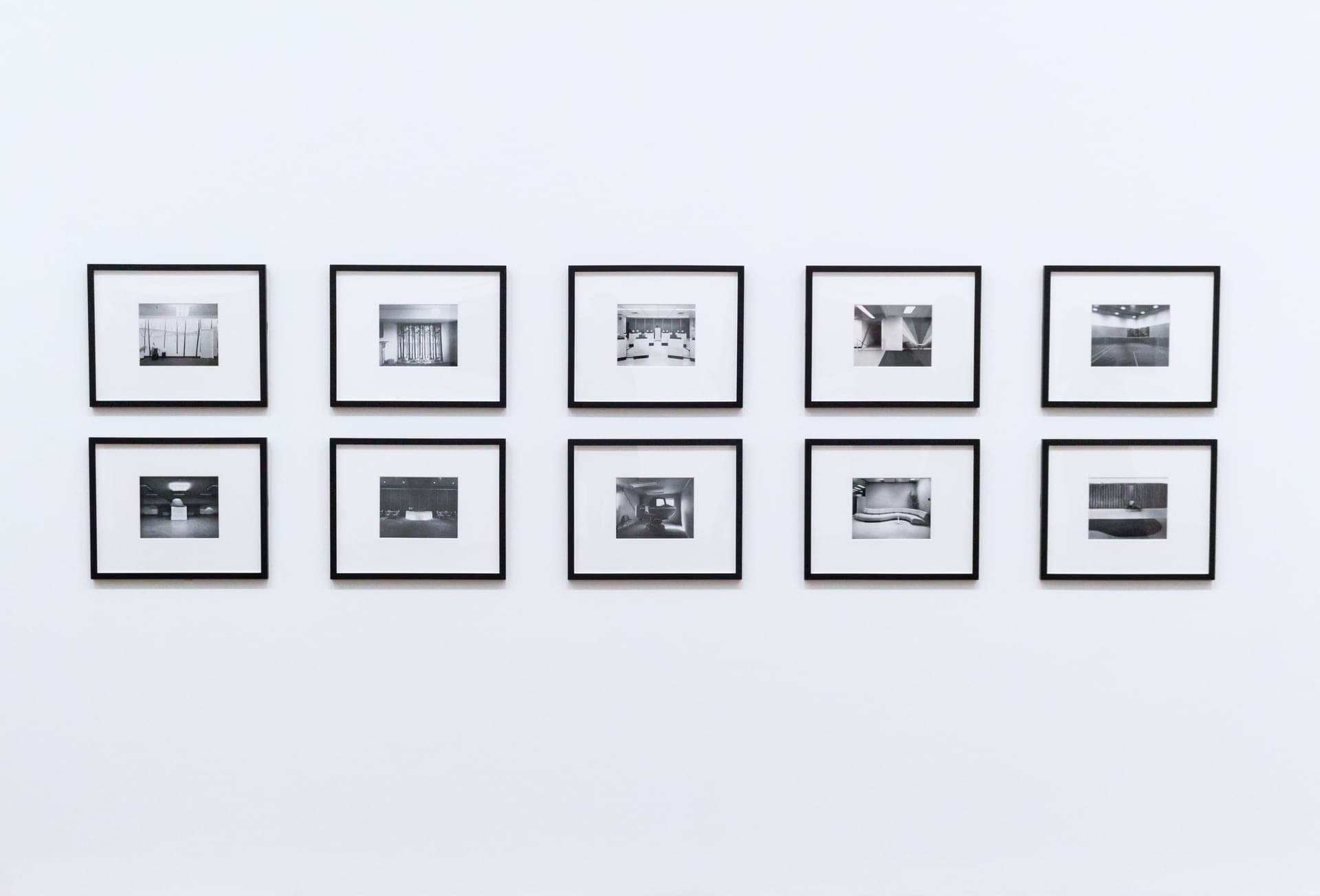 STAS Cliprail Picture Hanging System Set Cords adjust continuously, so you set the height by eye with the frame already up rather than calculating it beforehand. | Best for height you keep changing |
Where the hook actually goes
The 57 inch figure is where the center of the art ends up, not where you put the fixing. The arithmetic:
- Take half the frame’s height.
- Add 57.
- Subtract the distance from the top of the frame down to the hanging point — taut wire, sawtooth notch or D-ring.
With adhesive strips there is no wire and the frame sits flat, so the strips go at 57 plus half the frame height, minus a little for where the strips sit on the back. Mark the wall before you expose any adhesive: strips do not forgive a second attempt.
The four exceptions
| Situation | Height | Why it differs |
|---|---|---|
| Above a sofa or console | 6-8 in above the furniture | Clearance wins over 57. A gap larger than 8 in breaks the visual link between art and furniture |
| Above a bed | 6-8 in above the headboard | Same rule. Also keep the weight down — this is the one place a failure lands on someone |
| Dining room | About 54-57 in | Viewed from a seated position, so a couple of inches lower reads correctly |
| Staircase | Follow the stair pitch | Centers track a line parallel to the handrail, not to the floor |
A fifth situation that is not really an exception: very high ceilings. The temptation is to raise everything to fill the wall. Resist it. Art hung above eye level reads as unreachable, and the fix for a tall wall is a taller arrangement, not a higher one — a stacked gallery arrangement rather than a single piece raised.
Over furniture, in more detail
Above a sofa the two rules can conflict: 57 inches to the center might put the bottom edge 12 inches above the sofa back, which looks disconnected. Clearance wins. Drop the piece until there are 6 to 8 inches between the furniture top and the frame’s bottom edge, and accept a center lower than 57.
Width matters as much as height here: the arrangement should be two-thirds to three-quarters of the furniture width. Art above the couch and art above the bed have the sizing tables for each.
Marking it accurately
No laser level needed. Measure up from the floor rather than down from the ceiling — ceilings are less level than floors and are not the reference the eye uses anyway.
Mark with a pencil dot, not tape. Painter’s tape left on a wall for days can lift paint, which is the exact failure the whole damage-free approach exists to avoid. And step back before you commit: put the frame against the wall at the marked height, hold it there, and look at it from where you will actually be sitting.
The picks in full
Each entry states what it is for, the specification that decides it, and who should skip it.
1. Best for getting it right first time
Command Large Picture Hanging Strips (17206)
3M Command
Sits flat with no wire drop to calculate — the center of the frame is simply the center of the art, so the height arithmetic gets much simpler.
- Rated weight
- 4 lb per set (pair)
- Max per frame
- 16 lb using four pairs
- Wall types
- Painted drywall, finished wood, tile, metal, glass
- Removal
- Stretch-release tab
The spec that decides it: 4 lb per set, 16 lb per frame with four sets, and no hanging hardware to offset.
Skip it if: You want to adjust after hanging. Strips do not reposition; use a hook or a rail.
2. Best when you may adjust
OOK Monkey Hook Drywall Picture Hanger
OOK
Goes in and comes out by hand, so if the first position is an inch off you simply move it. One pin-sized hole either way.
- Rated weight
- 35 lb on 1/2 in residential drywall; 50 lb on 5/8 in commercial drywall
- Wall types
- Hollow drywall only — not studs, not plaster over lath, not masonry
- Tools
- None — push and twist by hand
- Wall damage
- One pin-sized hole
The spec that decides it: 35 lb on 1/2 in drywall, removable and reusable by hand.
Skip it if: The wall is plaster, masonry or tile — it needs hollow drywall.
3. Best for height you keep changing
STAS Cliprail Picture Hanging System Set
STAS
Cords adjust continuously, so you set the height by eye with the frame already up rather than calculating it beforehand.
- Coverage
- Sets sized from about 4.9 ft to 29.5 ft of wall
- Rated load
- Cliprail Pro: up to 99 lb per 39.25 in of rail (manufacturer figure)
- Adjustment
- Hooks and cords slide along the rail — no new holes to move a frame
- Wall damage
- One row of screw holes at the top of the wall
The spec that decides it: Cliprail Pro rated up to 99 lb per 39.25 in; hooks and cords slide freely.
Skip it if: You are hanging one picture — the install only pays back across a wall.
Common questions
How high should you hang art?
Center the artwork 57 inches from the floor. That is the standard used in galleries and museums and it sits at roughly average adult eye level. Measure to the middle of the piece, not to the hook or the top of the frame.
How high should you hang art above a couch?
Leave 6 to 8 inches between the top of the sofa back and the bottom edge of the frame. Where that conflicts with the 57 inch center, clearance wins — a gap much bigger than 8 inches makes the art look disconnected from the furniture.
How high should you hang art above a dining table?
Slightly lower than the standard, around 54 to 57 inches to the center. A dining room is viewed from a seated position, so dropping a couple of inches lines the work up with a seated eye.
How high should you hang art above a bed without a headboard?
Treat the mattress top as the furniture line and leave 6 to 8 inches above it, which usually lands the center near the standard 57 inches. Keep the piece light: above a bed is the one place where a hanging failure lands on someone.
Where do you put the hook if the art center should be at 57 inches?
Add half the frame height to 57, then subtract the drop from the top of the frame to the taut hanging wire. A 24 inch frame with a 3 inch wire drop puts the hook at 66 inches. Measure the wire pulled taut, not slack.
Sources for the figures on this page
Read next
- What Size Art Above a Couch
The two-thirds rule with a full sizing table by sofa width, and the 6-8 inch clearance that beats the 57 inch standard.
- What Size Art Above a Bed
Sizing tables for twin through king, the 6-8 inch clearance, and the weight rule specific to this wall.
- Gallery Wall Layouts and Spacing
The 2-3 inch gap rule, the 57 inch group center, and how to size the whole arrangement to the furniture below it.
- How to Hang Pictures Without Nails
Every no-nail method ranked by rated weight capacity, from 1 lb poster strips to a 35 lb drywall hook.
- Staircase Gallery Walls
Finding the stair pitch guide line, measuring height from each tread, and why adhesive is the wrong fixing on stairs.
- Best Picture Hanging Strips
Strip-by-strip weight ratings mapped to the frame sizes each one suits, from a 5x7 photo to a 24x36 poster frame.