Staircase Gallery Walls
The one gallery wall where the floor is not your reference line — and the one where you should not be reaching from a ladder to reposition a frame.
By Janet H. · Published
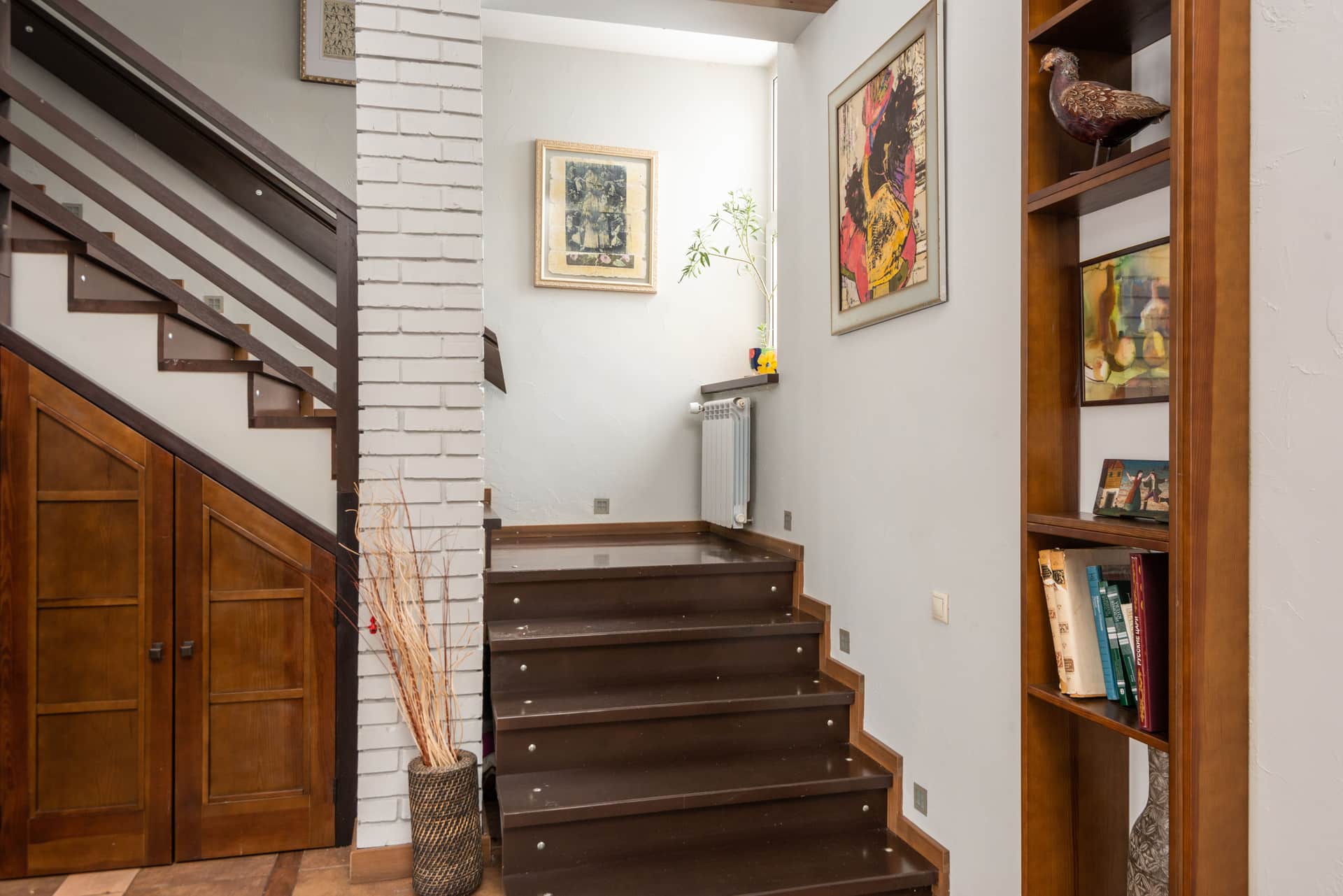
Frame centers follow a line parallel to the handrail, and each frame’s height is measured from the tread directly below it — not from the ground floor. Measure 57 inches up from the nose of the step beneath each frame and you get a staircase arrangement that reads correctly from every point on the stairs.
One firm recommendation: do not use adhesive strips here. You will be on a ladder over a drop, repositioning is genuinely difficult, and a frame coming loose on a staircase is the worst case in this whole category.
Disclosure: Hang & Hue earns commission from qualifying purchases made through the links on this page, at no extra cost to you. As an Amazon Associate we earn from qualifying purchases. It does not change which products we recommend or the order they appear in — read our editorial policy and full affiliate disclosure.
Quick picks
Tap any row to jump to the full write-up.
| # | Product | Best for | Price |
|---|---|---|---|
| 1 | 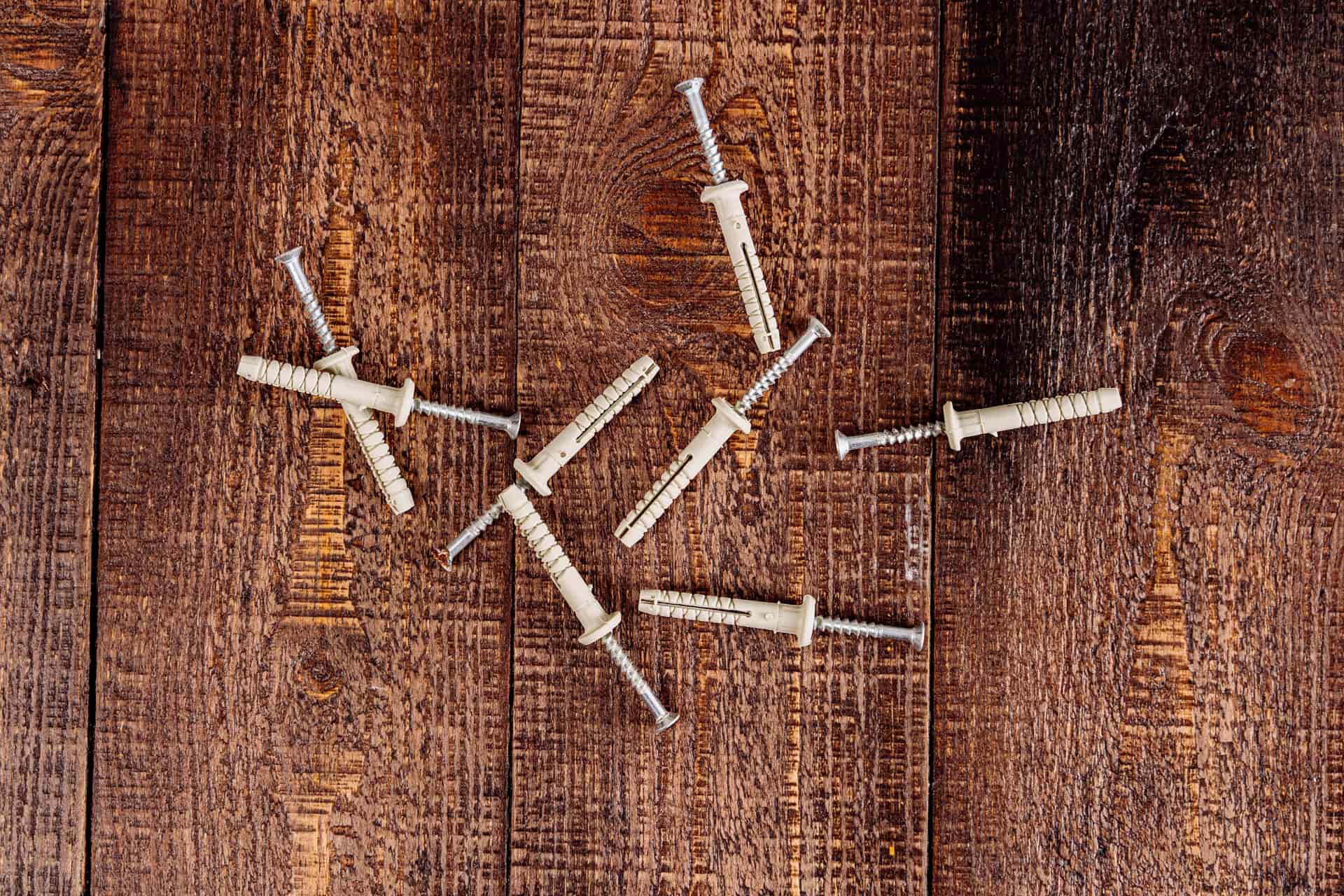 OOK Monkey Hook Drywall Picture Hanger Goes in by hand and comes out by hand, so a frame that lands wrong can be moved rather than lived with. 35 lb, one pin-sized hole. | Best fixing for stairs | |
| 2 | 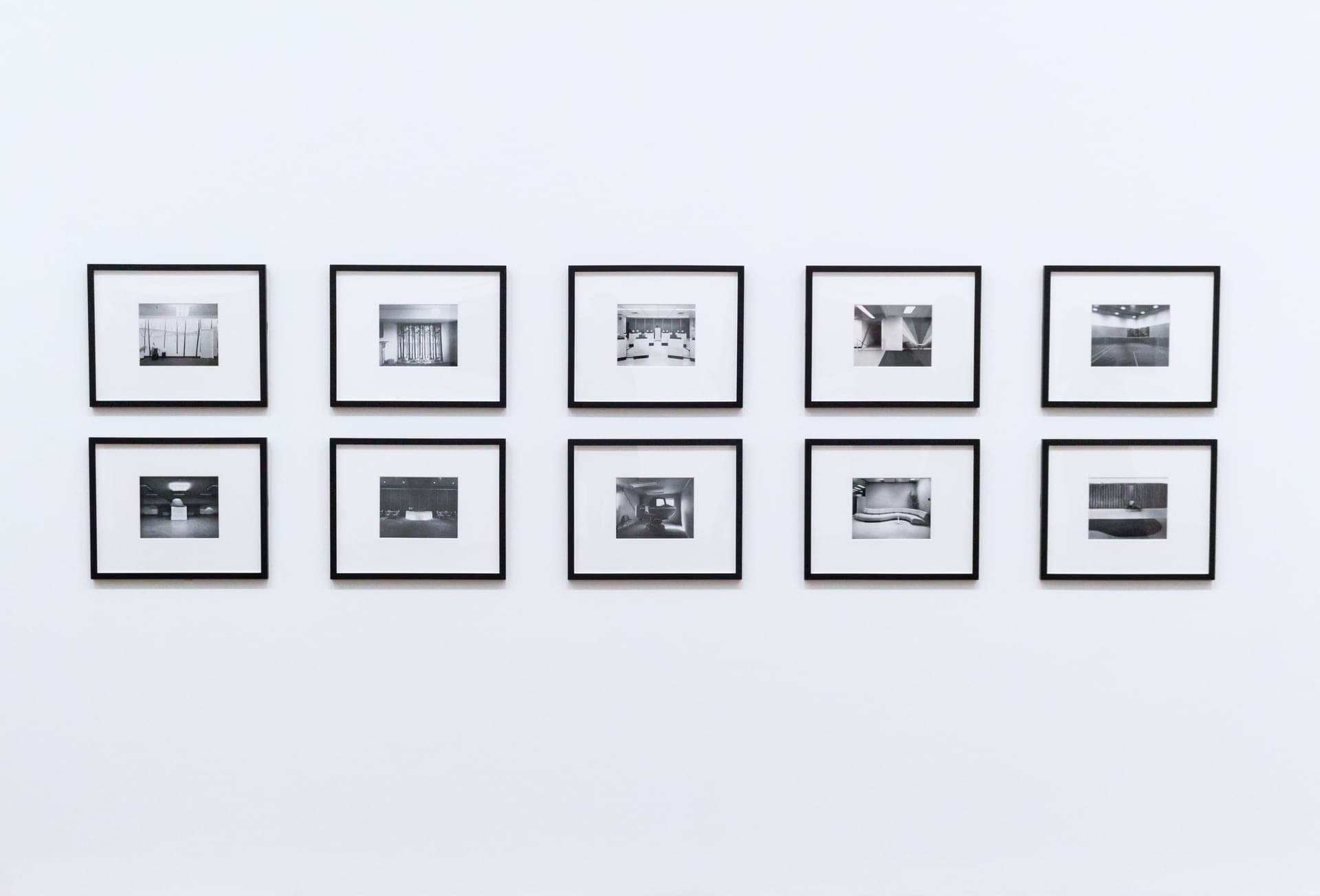 STAS Cliprail Picture Hanging System Set Frames hang from sliding cords, so adjusting one means moving a hook rather than getting the ladder back out over a stairwell. | Best if you will adjust it | |
| 3 | 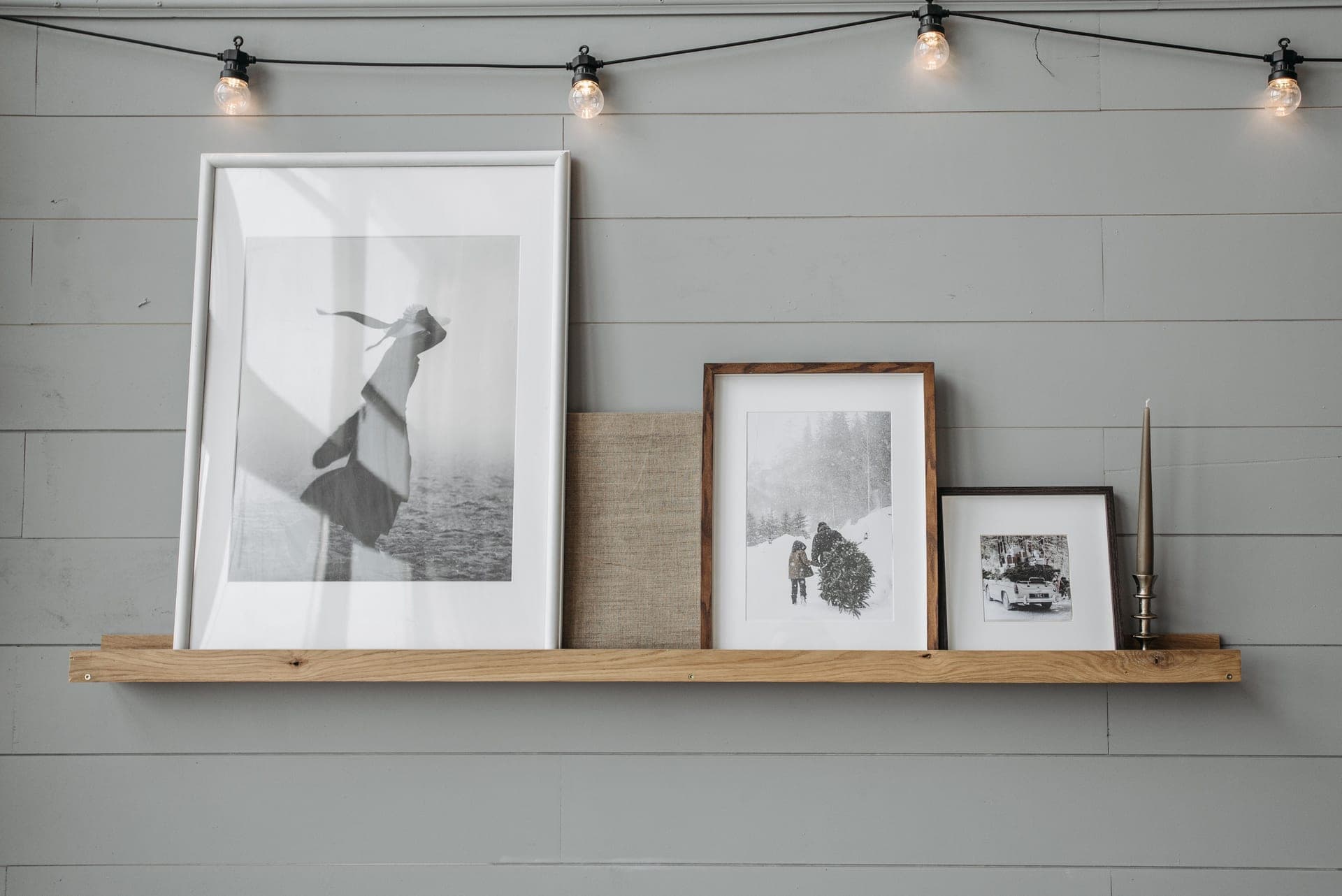 MCS Picture Ledge Shelf Two screws per ledge, everything reachable, and the arrangement changes without a ladder. Available in 23.75 and 35 inch lengths. | Best low-fixing option | |
| 4 |  Frametory Gallery Wall Frame Set Matched collage sets in smaller sizes, which suit a staircase where you pass within two feet of every frame. | Best frames for close viewing |
Finding the guide line
The staircase has a pitch, and every reference on the wall has to follow it. The handrail is the visible expression of that pitch, so use it.
- Measure up from the nose of the bottom step to 57 inches. Mark it.
- Do the same from a step near the top of the run. Mark it.
- Snap or pencil a line between the two marks. That line is parallel to the handrail and it is the center line for every frame.
- Place each frame’s vertical center on that line. The frames step upward together and the arrangement reads level relative to the stairs.
Laying it out
| Approach | How it works | Suits |
|---|---|---|
| Single line on the pitch | Every frame centered on the guide line, evenly spaced along it | Narrow stairwells; the calmest option |
| Staggered band | Frames alternate above and below the guide line within a band | Wider walls; reads as a collection rather than a row |
| Cluster at the turn | A dense group on the landing, thinning along the run | Stairs with a half-landing; puts the interest where you pause |
| Ledge on the pitch | A ledge cut to follow the stairs, frames leaning on it | Anyone who expects to change it |
Keep the 2 to 3 inch gap measured along the pitch, not horizontally — measuring horizontally on a slope produces gaps that look uneven even when the numbers are identical. The spacing guide covers the flat-wall version.
What to hang it with
Stairs change the calculus. On a flat wall, adhesive is the low-risk option because a failure means a frame on the carpet. On stairs it means a frame falling down a stairwell, and you cannot easily get back to a frame that has drifted crooked.
- Small-hole drywall hooks. Go in by hand, hold 35 lb, come out and move if the first position is wrong. The right default here. No-drill kits.
- A picture rail. Fixed along the wall above the stairs, with cords dropping to each frame. Adjusting a frame means sliding a hook rather than getting a ladder out. Rail versus adhesive.
- A ledge on the pitch. Fewer fixings, and everything reachable. Picture ledges.
What to put on a staircase wall
Stairs are viewed in motion, at close range and at an angle. That rules some things out:
- Small frames work here in a way they do not over a sofa. You pass within two feet of them.
- Detail-heavy pieces work. People slow down on stairs; this is the place for the photograph that rewards looking.
- Reflective glazing is a problem. Stairwell lighting is usually overhead and close, which glares off glass at exactly the angle you climb. Matte acrylic or no glazing is better here than anywhere else in the house.
- Heavy frames are a bad idea. Weight over a stairwell is risk with no upside.
The picks in full
Each entry states what it is for, the specification that decides it, and who should skip it.
1. Best fixing for stairs
OOK Monkey Hook Drywall Picture Hanger
OOK
Goes in by hand and comes out by hand, so a frame that lands wrong can be moved rather than lived with. 35 lb, one pin-sized hole.
- Rated weight
- 35 lb on 1/2 in residential drywall; 50 lb on 5/8 in commercial drywall
- Wall types
- Hollow drywall only — not studs, not plaster over lath, not masonry
- Tools
- None — push and twist by hand
- Wall damage
- One pin-sized hole
The spec that decides it: 35 lb on 1/2 in drywall, installed and removed without tools.
Skip it if: The stairwell wall is plaster over lath, which is common in older houses.
2. Best if you will adjust it
STAS Cliprail Picture Hanging System Set
STAS
Frames hang from sliding cords, so adjusting one means moving a hook rather than getting the ladder back out over a stairwell.
- Coverage
- Sets sized from about 4.9 ft to 29.5 ft of wall
- Rated load
- Cliprail Pro: up to 99 lb per 39.25 in of rail (manufacturer figure)
- Adjustment
- Hooks and cords slide along the rail — no new holes to move a frame
- Wall damage
- One row of screw holes at the top of the wall
The spec that decides it: Cliprail Pro rated up to 99 lb per 39.25 in; hooks and cords slide freely.
Skip it if: The stairwell wall has no continuous straight run to mount a rail on.
3. Best low-fixing option
MCS Picture Ledge Shelf
MCS Industries
Two screws per ledge, everything reachable, and the arrangement changes without a ladder. Available in 23.75 and 35 inch lengths.
- Lengths
- 23.75 in and 35 in, sold singly and in pairs
- Lip
- Front lip holds leaning frames
- Finishes
- White and black woodgrain
- Mounting
- Wall screws
The spec that decides it: Front lip for leaning frames, in two standard lengths.
Skip it if: Your stairs are steep — a ledge on a steep pitch can put frames at an awkward angle.
4. Best frames for close viewing
Frametory Gallery Wall Frame Set
Frametory
Matched collage sets in smaller sizes, which suit a staircase where you pass within two feet of every frame.
- Set shape
- Collage sets in matched finishes
- Glazing
- Glass or acrylic by line
- Matting
- Mats on the matted lines
- Included
- Wall-mount hardware
The spec that decides it: Matched collage sets with mats on the matted lines.
Skip it if: The stairwell is brightly lit from overhead — prioritize non-glare glazing over the set finish.
Common questions
How do you hang a gallery wall up the stairs?
Mark 57 inches up from the nose of a step near the bottom and again near the top, then draw a line between the marks. That line is parallel to the handrail and is the center line for every frame. Space the frames along it at consistent 2 to 3 inch gaps measured along the pitch.
How high should pictures be on a staircase wall?
Measure 57 inches up from the tread directly below each frame, not from the ground floor. Your eye level on stairs is relative to the step you are standing on, so measuring from the floor puts the upper frames far too high.
Can you use command strips on a staircase gallery wall?
You can, but we would not. Repositioning from a ladder over a stairwell is difficult, adhesive does not allow a second attempt, and a frame coming loose over stairs is the worst outcome in this category. Use a small-hole hook, a rail or a ledge.
How do you space frames on a staircase wall?
Measure the gaps along the pitch rather than horizontally. Two to three inches, consistently. Gaps measured horizontally on a slope look uneven even when the numbers are identical.
What size frames work best on a staircase?
Smaller frames than you would use over a sofa, because you pass within a couple of feet of them. Detail-heavy pieces work well here. Avoid heavy frames and highly reflective glazing, which glares under overhead stairwell lighting.
Sources for the figures on this page
Read next
- Gallery Wall Layouts and Spacing
The 2-3 inch gap rule, the 57 inch group center, and how to size the whole arrangement to the furniture below it.
- Best No-Drill Hanging Kits
Drywall hooks at 35 lb, no-stud plates at 200 lb, and rail systems — with the wall damage each one actually causes.
- Best Picture Ledges
Ledges compared on length, lip depth and mounting — the two-screw alternative to hanging a whole gallery wall.
- How High to Hang Art
The 57-inch gallery standard, the hook-position arithmetic, and the exceptions for sofas, beds, dining rooms and stairs.
- Picture Rail vs Adhesive Hanging
Weight ceilings, install cost and what happens the third time you rearrange the wall.
- Grid vs Salon-Style
Grid or salon-style: difficulty, forgiveness, which rooms each suits, and how each one behaves when you add a frame later.