Picture Rail vs Adhesive Hanging
One is zero holes with a 16 lb limit. The other is a single row of screws and then unlimited freedom. The right answer depends on how often the wall changes.
By Janet H. · Published
Adhesive if you are hanging a few frames once. A picture rail if the wall will keep changing, or if anything on it exceeds 16 lb. That is the whole decision, and it turns on how many times you expect to move something.
A rail costs one row of screws at the top of the wall and then nothing forever. Three rearrangements in, it has made fewer holes than hanging the same frames individually did the first time.
Disclosure: Hang & Hue earns commission from qualifying purchases made through the links on this page, at no extra cost to you. As an Amazon Associate we earn from qualifying purchases. It does not change which products we recommend or the order they appear in — read our editorial policy and full affiliate disclosure.
Quick picks
Tap any row to jump to the full write-up.
| # | Product | Best for | Price |
|---|---|---|---|
| 1 | 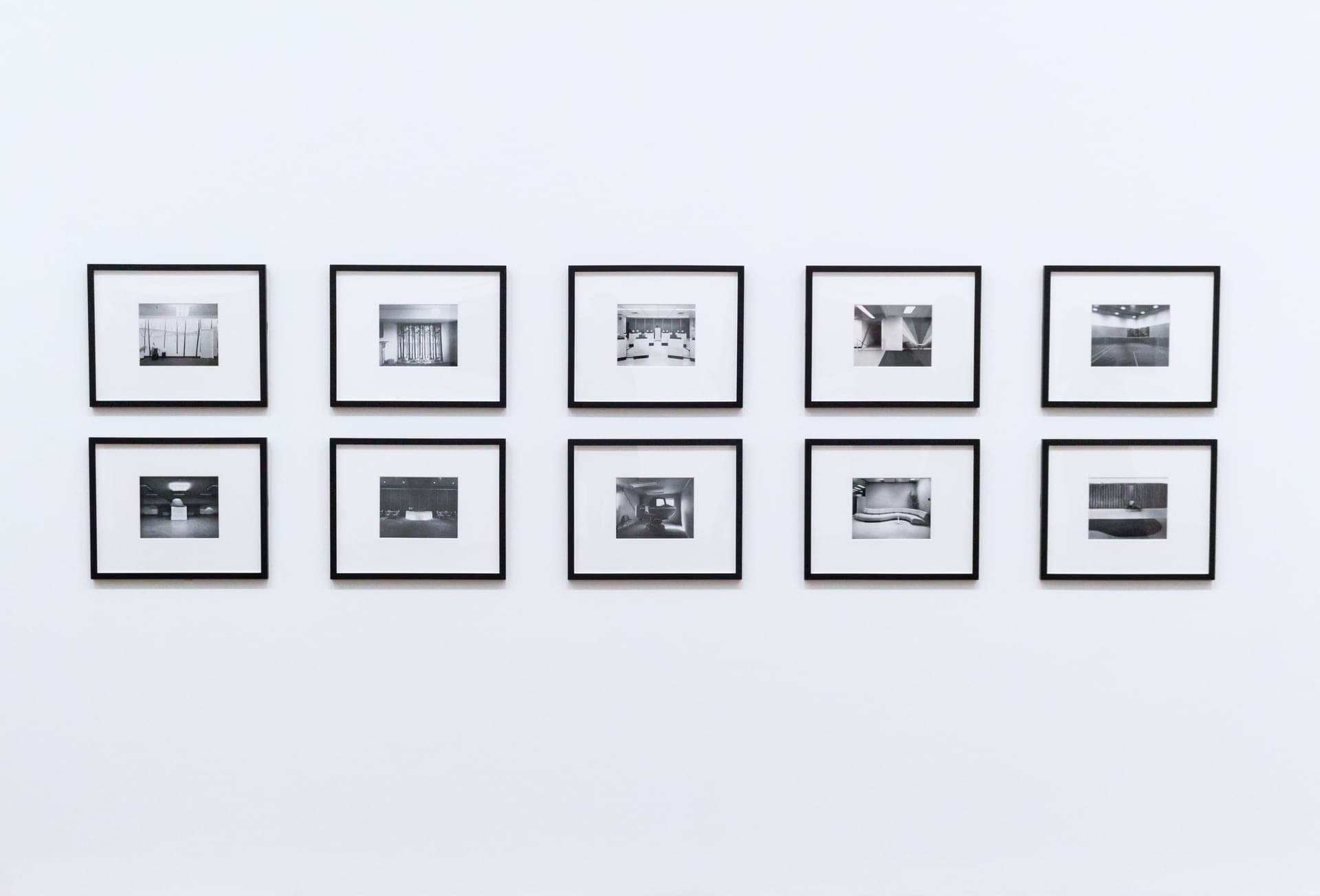 STAS Cliprail Picture Hanging System Set Rail, hooks and cords in one kit, sized by wall coverage. One install and the wall is permanently reconfigurable. | Best rail system | |
| 2 | STAS Cliprail Max Picture Hanging System Set The same system with an extra rim that closes the gap to the ceiling, so the rail reads as trim rather than hardware. | Best for a flush ceiling line | |
| 3 | 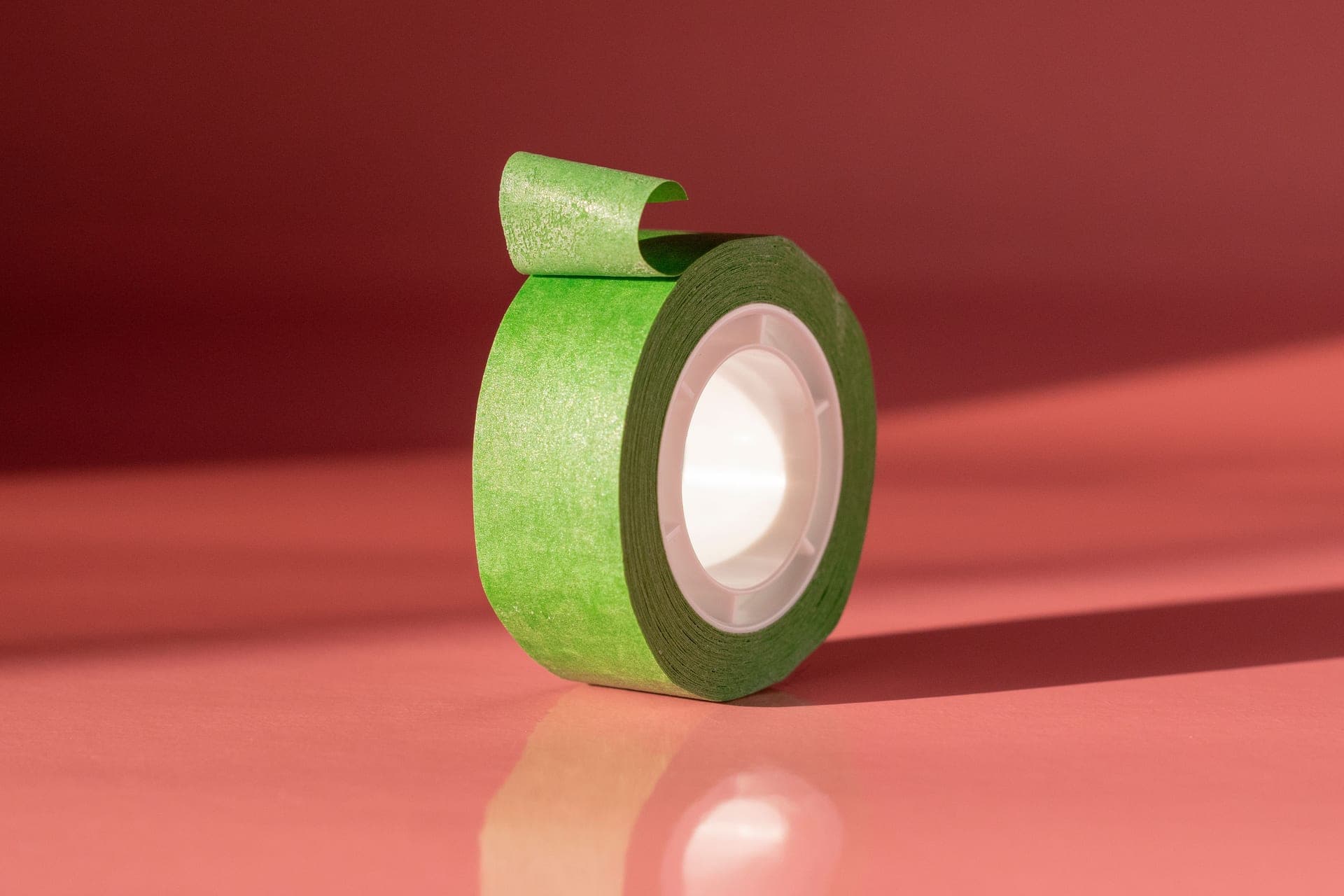 Command Large Picture Hanging Strips (17206) If the lease permits nothing at all, this is the ceiling of what is possible: 16 lb per frame and not a mark left behind. | Best zero-hole option | |
| 4 | 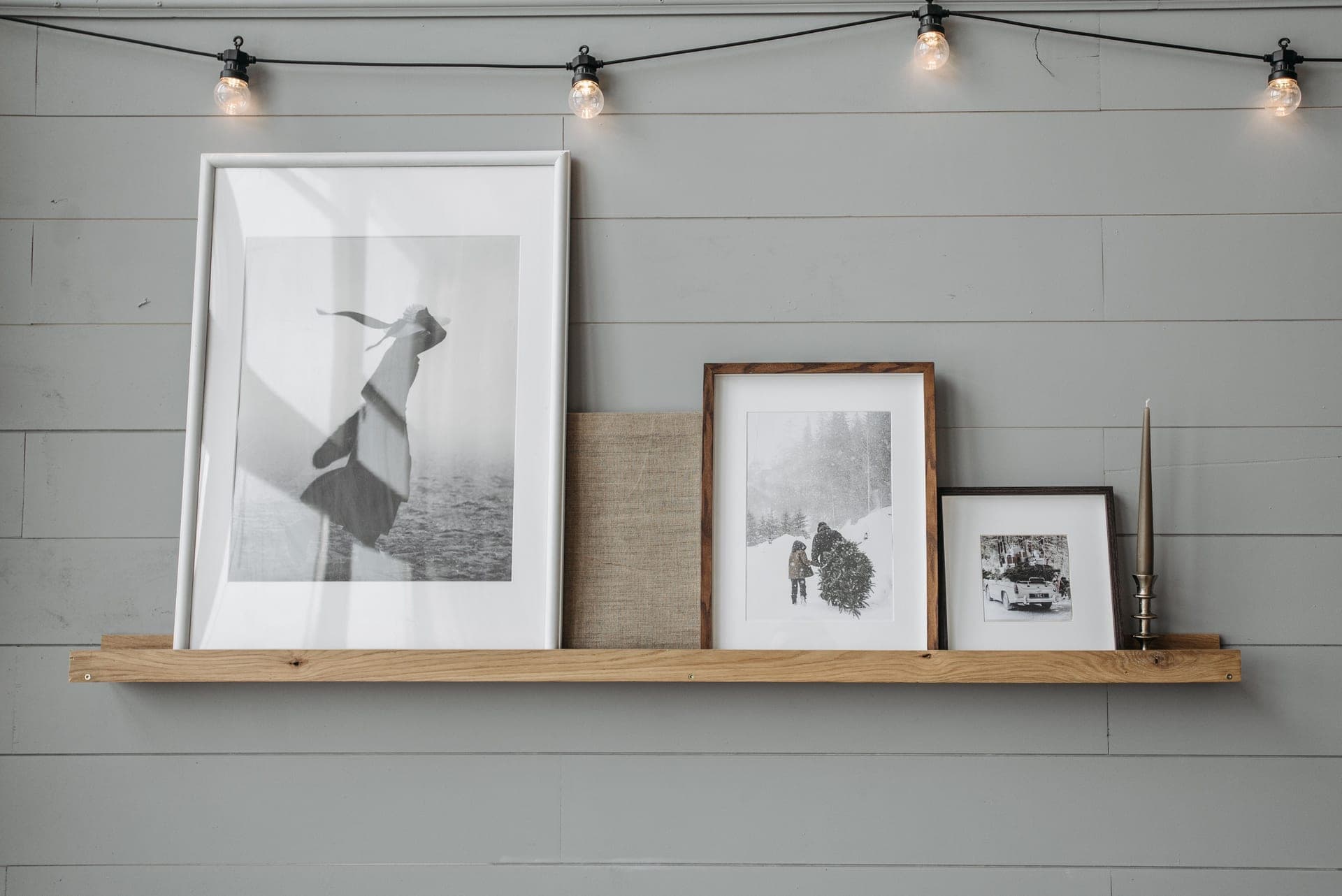 Kate and Laurel Levie Wood Floating Picture Ledge Two screws instead of twenty, and the arrangement changes in seconds with no hardware at all behind the frames. | The middle ground |
Side by side
| Adhesive strips and hooks | Picture rail | |
|---|---|---|
| Weight ceiling | 16 lb per frame (four sets of Command Large) | STAS Cliprail Pro: up to 99 lb per 39.25 in of rail |
| Holes in the wall | None | One row of screws along the top of one wall |
| Cost to rearrange | New strips each time | Nothing — the hooks slide |
| Works on textured walls | No | Yes — the rail spans the texture |
| Works on wallpaper | No | Yes |
| Install time | Minutes per frame | An hour or two, once |
| Reversible at move-out | Fully | Filler and touch-up on one row of holes |
| Best for | A few frames, smooth painted walls | Gallery walls, hallways, anything that changes |
Where the rail genuinely wins
- Textured and papered walls. The rail is screwed through whatever is on the surface into the wall behind it, so texture is irrelevant. This is the single biggest practical advantage and it is why our textured-wall guide recommends it.
- Anything over 16 lb. Large mirrors, deep-framed canvases, framed pieces with real glass at poster size. Adhesive has no answer here.
- Walls you rearrange. A hallway you rotate seasonally, a growing gallery wall, a child’s artwork that changes monthly. Every change on adhesive costs strips; every change on a rail costs nothing.
- Getting the height exactly right. Cords adjust continuously, so you set the height by eye after the frame is up, not before.
Where adhesive is still the right call
- Genuinely zero holes. Some leases and most dorms permit nothing at all. A rail is still screws, however few. Dorm rooms are the clearest case.
- One or two frames. The rail’s install cost only pays back across a wall.
- Short tenancies. Under a year, you will probably not rearrange enough for the rail to break even.
- Frames that should sit flush. Rail-hung frames hang from cords and sit slightly off the wall, and they move if knocked. Adhesive holds a frame tight against the plaster.
What installing a rail actually involves
Less than people fear. The rail screws into the wall along a level line near the ceiling — typically one fixing every 12 to 16 inches, into drywall with the supplied anchors or into studs where they fall. Hooks clip onto the rail, cords drop from the hooks, and frames hang from the cords.
Sets are sold by wall coverage: STAS lists kits from roughly 4.9 ft up to 29.5 ft with hooks and cords included. Measure the wall and buy one size up — rails cut down easily and running short means a second order. The no-drill kit roundup covers the systems worth buying.
The picks in full
Each entry states what it is for, the specification that decides it, and who should skip it.
1. Best rail system
STAS Cliprail Picture Hanging System Set
STAS
Rail, hooks and cords in one kit, sized by wall coverage. One install and the wall is permanently reconfigurable.
- Coverage
- Sets sized from about 4.9 ft to 29.5 ft of wall
- Rated load
- Cliprail Pro: up to 99 lb per 39.25 in of rail (manufacturer figure)
- Adjustment
- Hooks and cords slide along the rail — no new holes to move a frame
- Wall damage
- One row of screw holes at the top of the wall
The spec that decides it: Cliprail Pro is rated up to 99 lb per 39.25 in of rail; kits cover 4.9 to 29.5 ft.
Skip it if: You cannot put any screws in the wall at all — a dorm, or a lease that forbids fixings outright.
2. Best for a flush ceiling line
STAS Cliprail Max Picture Hanging System Set
STAS
The same system with an extra rim that closes the gap to the ceiling, so the rail reads as trim rather than hardware.
- Coverage
- Sets sized from about 4.9 ft to 6.6 ft of wall
- Profile
- Extra rim finishes the rail flush to the ceiling
- Adjustment
- Hooks and cords slide along the rail
- Wall damage
- One row of screw holes at the top of the wall
The spec that decides it: Ceiling-flush profile; kits sized around 4.9 to 6.6 ft of wall.
Skip it if: The wall is long — the Max kits cover shorter runs than the Pro.
3. Best zero-hole option
Command Large Picture Hanging Strips (17206)
3M Command
If the lease permits nothing at all, this is the ceiling of what is possible: 16 lb per frame and not a mark left behind.
- Rated weight
- 4 lb per set (pair)
- Max per frame
- 16 lb using four pairs
- Wall types
- Painted drywall, finished wood, tile, metal, glass
- Removal
- Stretch-release tab
The spec that decides it: 4 lb per set, 16 lb per frame with four sets.
Skip it if: The wall is textured or papered, or anything you are hanging exceeds 16 lb.
4. The middle ground
Kate and Laurel Levie Wood Floating Picture Ledge
Kate and Laurel
Two screws instead of twenty, and the arrangement changes in seconds with no hardware at all behind the frames.
- Lengths
- Sold in several lengths including 24 in and 42 in
- Lip
- Front lip holds leaning frames
- Finishes
- White, black, gold
- Mounting
- Wall screws — one shelf replaces a row of frame holes
The spec that decides it: Front lip sized to hold leaning frames; lengths from 24 in upward.
Skip it if: You want frames at different heights — a ledge puts everything on one line.
Common questions
Is a picture rail worth installing in a rental?
If you expect to rearrange the wall more than twice, yes. A rail is one row of screws along the top of the wall, and after that every frame moves freely. Across a gallery wall that changes, it makes fewer holes than hanging those frames individually even once.
How much weight can a picture rail hold?
STAS publishes up to 99 lb per 39.25 inches of rail for its Cliprail Pro, which is far beyond any adhesive option. The practical limit is usually the wall fixings rather than the rail itself.
Can you use a picture rail on a textured wall?
Yes, and this is one of its main advantages. The rail is screwed through the surface into the wall behind it, so orange peel, knockdown and popcorn finishes make no difference — unlike adhesive, which needs a smooth surface to bond to.
Do picture rails damage the wall?
They leave one row of screw holes along the top of a single wall, which fills and paints over in an afternoon. Weighed against the alternative — two holes per frame across a whole gallery wall — a rail is often the smaller repair.
Sources for the figures on this page
Read next
- Best No-Drill Hanging Kits
Drywall hooks at 35 lb, no-stud plates at 200 lb, and rail systems — with the wall damage each one actually causes.
- Hanging on Textured Walls
Why adhesive fails on orange peel, knockdown and popcorn — and the three fixings that hold on a textured wall.
- Best Picture Ledges
Ledges compared on length, lip depth and mounting — the two-screw alternative to hanging a whole gallery wall.
- How to Hang Pictures Without Nails
Every no-nail method ranked by rated weight capacity, from 1 lb poster strips to a 35 lb drywall hook.
- Gallery Wall Layouts and Spacing
The 2-3 inch gap rule, the 57 inch group center, and how to size the whole arrangement to the furniture below it.
- Hanging a Heavy Mirror Without Drilling
Why adhesive is out at mirror weights, the no-stud plates rated 100-200 lb, and when to lean it instead.