What Is Float Mounting?
Floated framing leaves the entire sheet visible — deckled edge and all — instead of tucking it under a mat. It is the right choice for less art than people think.
By Janet H. · Published

Float mounting means the whole sheet of paper stays visible, with nothing overlapping its edges. The sheet is hinged onto a backing board and sits slightly proud of it, so it appears to float inside the frame. A mat does the opposite: it covers the paper edge and frames the image.
Float it when the edge is part of the artwork — a hand-torn deckle, a visible plate mark, a signature in the margin. Mat it when the edge is just where the paper stopped.
Disclosure: Hang & Hue earns commission from qualifying purchases made through the links on this page, at no extra cost to you. As an Amazon Associate we earn from qualifying purchases. It does not change which products we recommend or the order they appear in — read our editorial policy and full affiliate disclosure.
Quick picks
Tap any row to jump to the full write-up.
| # | Product | Best for | Price |
|---|---|---|---|
| 1 | 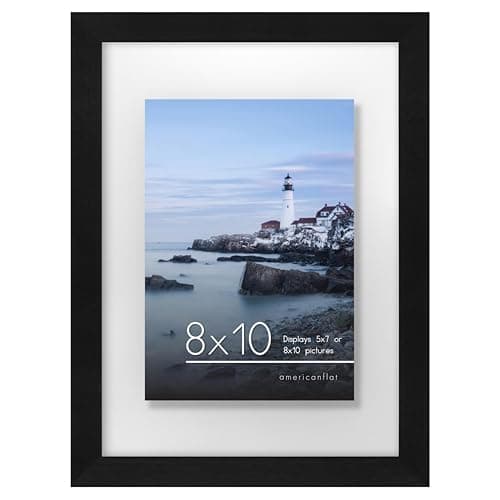 Americanflat Floating Frame The print sits between two glazing panes so the paper edges stay visible from the front and the wall shows through around them. The simplest way to get the floated look without hinging anything. | Best for a deckle edge | $14.99 · View on Amazon #ad How we’re funded · Price as of November 1, 2026 |
| 2 | 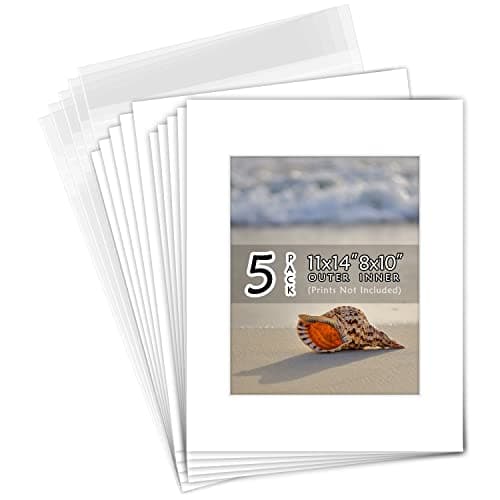 Golden State Art Pre-Cut Mat Board Acid-free board with backing, which is what a proper float mount needs behind the sheet — the board is on show, so its chemistry and color both matter. | Best backing board | $17.99 · View on Amazon #ad How we’re funded · Price as of November 1, 2026 |
| 3 |  Craig Frames Float Frame A recessed channel sized to standard canvas depths, leaving a shadow gap around a stretched canvas. This is the canvas meaning of floating, not the paper one. | Best for canvas | |
| 4 | 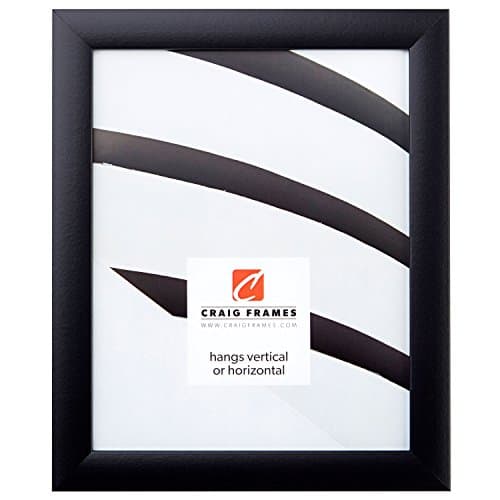 Craig Frames Picture Frame A wide molding choice including deep profiles, which is what gives a float mount the air gap it needs between the sheet and the glazing. | Best deep-rebate frame | $24.99 · View on Amazon #ad How we’re funded · Price as of November 1, 2026 |
Float mount versus mat — what each one hides
This is the whole decision, and it is about the paper rather than the image.
| Float mount | Mat | |
|---|---|---|
| What you see | The entire sheet, edges included | The image only; the paper edge is under the mat |
| What holds the art | Hinges behind the sheet, invisible from the front | The mat overlaps the edge and holds it |
| Edge treatment | Celebrated — deckle, plate mark, signature all show | Hidden by design |
| Air gap to the glazing | Needs a spacer or a deep rebate | The mat thickness provides it automatically |
| Shows paper flaws | Yes — every dog-ear and crease is on display | No — the mat covers the outer margin |
| Suits | Original prints, heavy paper, deckle edges | Photographs, posters, anything machine-trimmed |
Three things all called floating
The word does three jobs in framing, and the listings rarely distinguish them. Knowing which one you are buying saves a return.
| Called | What it actually is | Best for |
|---|---|---|
| Float mount | Paper hinged onto a backing board with a visible margin of board around it | Works on paper where the sheet edge matters |
| Floating glass frame | The art sits between two panes of glazing, so the wall shows through around it | Deckle-edge prints, pressed botanicals, odd-size pieces |
| Canvas float frame | A frame with a recessed channel, leaving a shadow gap around a stretched canvas | Giving a gallery-wrapped canvas a finished edge |
For the second and third, the floating frame roundup covers which does what and in which sizes.
What a float mount needs to be done properly
Three components, and skipping any of them is where home float mounts go wrong.
- Conservation-grade backing board. The board is now visible around your artwork, so its color and its chemistry both matter. Non-archival board yellows, and because it is on show the yellowing is obvious rather than hidden.
- Hinges, not adhesive across the back. The sheet has to be free to expand and contract as humidity changes. Published float-mounting guidance uses hinges placed so they do not show above the top edge, specifically because the paper needs that freedom to move with minimal cockling — and because the mount should be reversible.
- A spacer between art and glazing. With no mat there is nothing holding the paper off the glass. Without a spacer or a deep rebate, the sheet touches the glazing and in a warm room it will eventually stick to it.
How much board to leave around the sheet
Float mounting has no standard border, which is exactly why it goes wrong. The working rule is that the visible board margin should read as deliberate rather than accidental — which in practice means at least an inch, and usually more.
| Sheet size | Board margin around the sheet | Frame you need |
|---|---|---|
| 5x7 | 1.5 in | 8x10 |
| 8x10 | 1.5 - 2 in | 11x14 or 12x16 |
| 11x14 | 2.5 in | 16x20 |
| 16x20 | 2 - 3 in | 20x24 or 24x30 |
| 18x24 | 3 in | 24x30 or larger |
Those are the same step-ups a mat uses, so the frame sizes are easy to source. The mat and frame size matrix lists every stocked pair, and the size chart has the standard dimensions.
When not to float
Three cases, and they cover most of what is actually on people’s walls. Photographs printed to size have nothing to show at the edge. Posters have trim marks and white borders that were never meant to be seen. And anything already creased or dog-eared at the corners will put that damage on permanent display, where a mat would simply cover it.
For those, a matted frame is the better buy, and framing a poster covers the poster case specifically.
The picks in full
Each entry states what it is for, the specification that decides it, and who should skip it.
1. Best for a deckle edge
Americanflat Floating Frame
Americanflat
The print sits between two glazing panes so the paper edges stay visible from the front and the wall shows through around them. The simplest way to get the floated look without hinging anything.
- Construction
- Print sits between two glazing panes — edges stay visible
- Sizes
- Standard sizes from small formats up
- Best for
- Deckle-edge prints, pressed botanicals, odd-size art
- Orientation
- Wall or tabletop
The spec that decides it: Double-glazed construction with the print edges left visible.
Skip it if: The sheet is machine-trimmed — there is no edge worth showing.
#ad How we’re funded · Price as of November 1, 2026
2. Best backing board
Golden State Art Pre-Cut Mat Board
Golden State Art
Acid-free board with backing, which is what a proper float mount needs behind the sheet — the board is on show, so its chemistry and color both matter.
- Cut
- Pre-cut bevel opening, standard step-down sizes
- Material
- Acid-free board with backing and a clear sleeve on most packs
- Sizes
- Common pairs such as 11x14 matted to 8x10
- Packs
- Singles and multi-packs
The spec that decides it: Acid-free board supplied with backing in standard sizes.
Skip it if: You are using a double-glazed floating frame — there is no board in that build.
#ad How we’re funded · Price as of November 1, 2026
3. Best for canvas
Craig Frames Float Frame
Craig Frames
A recessed channel sized to standard canvas depths, leaving a shadow gap around a stretched canvas. This is the canvas meaning of floating, not the paper one.
- Construction
- Float frame with a recessed channel for stretched canvas
- Sizes
- Sized to standard canvas depths
- Best for
- Giving a stretched canvas a finished edge
- Origin
- Made in the USA
The spec that decides it: Recessed channel sized for stretched canvas depths.
Skip it if: Your artwork is on paper — this frame has no glazing and no backing board.
4. Best deep-rebate frame
Craig Frames Picture Frame
Craig Frames
A wide molding choice including deep profiles, which is what gives a float mount the air gap it needs between the sheet and the glazing.
- Sizes
- Very wide size range, including oversize and non-standard
- Glazing
- Lightweight shatter-resistant acrylic front
- Profiles
- Contemporary through ornate; wide molding choice
- Origin
- Made in the USA
The spec that decides it: Deep molding profiles with lightweight acrylic glazing.
Skip it if: You want the whole thing supplied ready to assemble — this is a frame only.
#ad How we’re funded · Price as of November 1, 2026
Common questions
What does float mounting mean in framing?
The entire sheet of paper stays visible with nothing overlapping its edges. The sheet is hinged onto a backing board and sits slightly proud of it, so it appears to float inside the frame. A mat does the reverse — it covers the paper edge and frames the image instead.
Is float mounting better than a mat?
Neither is better; they show different things. Float when the paper edge is part of the artwork — a hand-torn deckle, a plate mark, a signature in the margin. Mat when the edge is simply where the paper stopped, which is the case for photographs, posters and anything machine-trimmed.
What is the difference between float mounting and a floating frame?
Float mounting is a method: the sheet is hinged onto visible backing board. A floating glass frame is a product: the art sits between two panes of glazing so the wall shows through around it. A canvas float frame is a third thing again — a frame with a recessed channel that leaves a shadow gap around a stretched canvas.
Can you float mount a print at home?
Yes, with conservation-grade backing board, paper hinges placed so they do not show above the top edge, and a spacer to hold the sheet off the glazing. Do not glue the whole back of the sheet down — that is permanent, irreversible, and the most reliable way to produce a visible ripple later.
How much border should a float mount have?
At least an inch, and usually more, so the visible board reads as deliberate rather than accidental. In practice that means 1.5 inches around a 5x7 or 8x10 sheet, 2.5 inches around an 11x14 and about 3 inches around an 18x24 — the same step-ups a mat uses, so standard frame sizes work.
Sources for the figures on this page
Read next
- Best Floating Frames
Double-glazed float frames for paper, and recessed float frames for canvas — two different products with the same name.
- How to Mat a Print
Working out the opening, choosing acid-free board, and the two mounting methods that do not damage the print.
- Mat Sizes for Standard Prints
The complete print size to mat opening to frame size matrix, with published border widths by artwork size.
- Best Matted Frames
Matted frames compared on border width, acid-free board and the step-down sizes each line covers.
- Picture Frame vs Shadow Box
Depth, mounting method, weight and hanging — what a shadow box does that a frame cannot, and when it is overkill.
- Poster vs Art Print
Paper stock, printing method, longevity and framing treatment — how to tell the two apart and which you need.
- Picture Frame Sizes Chart
Every standard frame size with its unmatted and matted capacity — the table to check before you order anything.
- Framing a Poster Without Damage
Reversible mounting for posters, the frameless options, and how to hang the result without putting holes in the wall.