How to Hang a Picture With Two Hooks
One hook puts the whole frame on one point and lets it swing. Two hooks fix it level and split the weight - as long as both holes land at the same height, which is the entire difficulty.
By Janet H. · Published
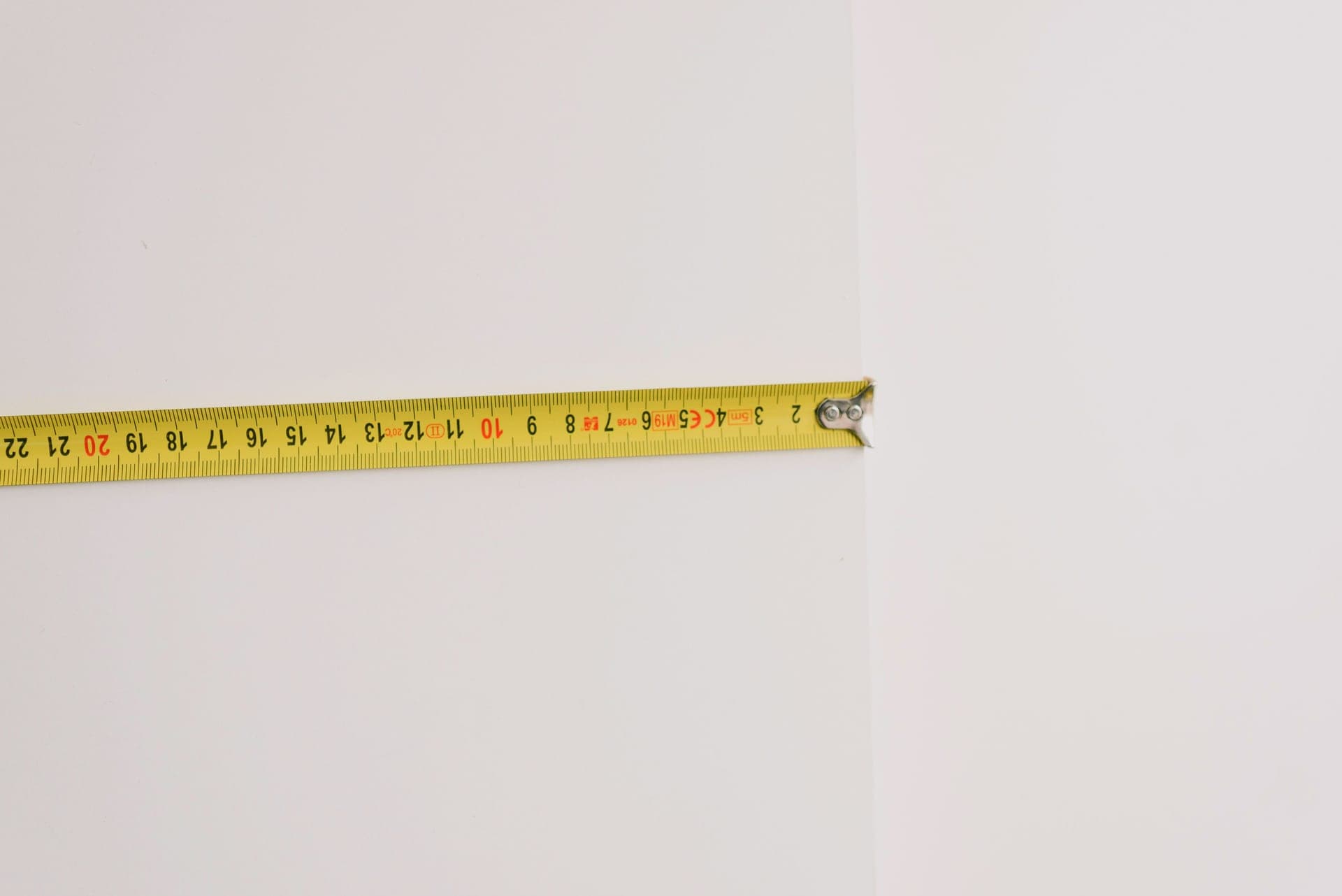
Measure from the top of the frame down to the hanging point, not from the floor up. Mark your target center height on the wall, subtract that drop, draw one level line at the result, and put both hooks on that line, spaced evenly about a third of the frame width apart.
Two hooks are worth the extra hole for two reasons: the frame cannot rotate out of level afterward, and each fixing carries roughly half the weight, which often brings a heavy frame back inside what the wall can take.
Disclosure: Hang & Hue earns commission from qualifying purchases made through the links on this page, at no extra cost to you. As an Amazon Associate we earn from qualifying purchases. It does not change which products we recommend or the order they appear in — read our editorial policy and full affiliate disclosure.
Quick picks
Tap any row to jump to the full write-up.
| # | Product | Best for | Price |
|---|---|---|---|
| 1 | 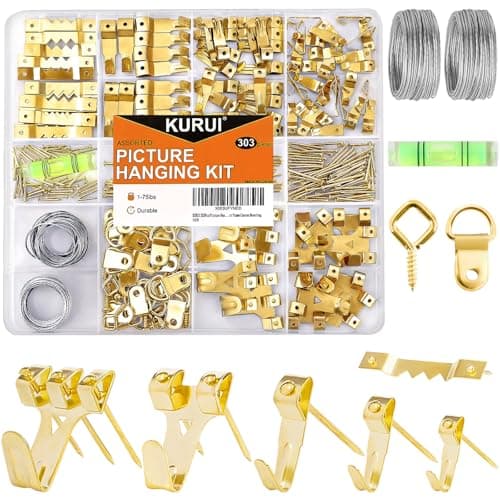 KURUI 303Pcs Picture Hanging Kit A 303-piece assortment that includes the hooks, the hardware nails, sawtooth hangers, wire, D-rings and a small level - which is every component a two-hook hang needs from one box, including the frame-side hardware most kits leave out. | Best overall kit | |
| 2 | 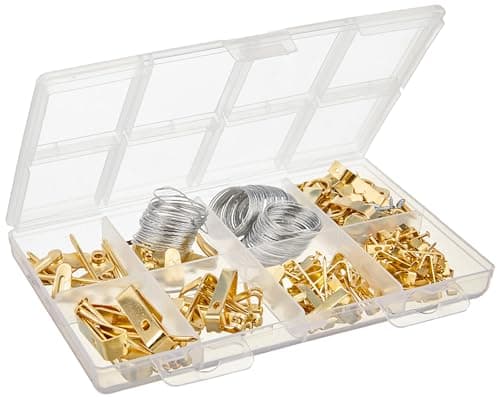 Amazon Basics Picture Hanging Hardware Assortment Kit, 220 Piece A 220-piece brass assortment that covers the common hook and nail sizes without the extras. The right purchase when you already own a level and a tape and just want matched pairs of hooks on hand. | Best simple assortment | $12.40 · View on Amazon #ad How we’re funded · Price as of November 1, 2026 |
| 3 | 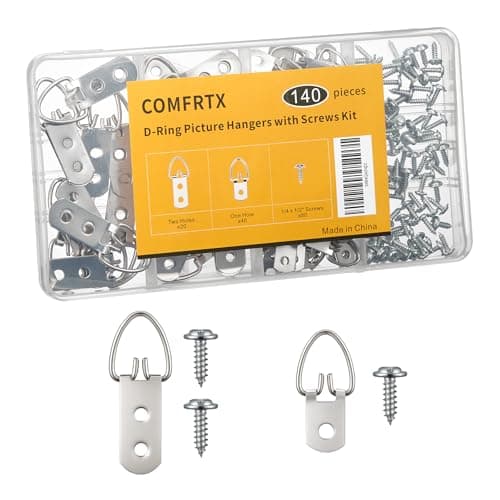 COMFRTX D-Ring Picture Hangers with Screws Kit, 140 Piece 140 pieces covering 40 single-hole and 20 double-hole D-rings with 80 screws, in two sizes. This is what you buy when a frame arrived with one sawtooth in the middle and you want two fixed points instead - the conversion that makes the whole method possible. | Best for converting a frame to two-point hanging | $8.99 · View on Amazon #ad How we’re funded · Price as of November 1, 2026 |
| 4 | 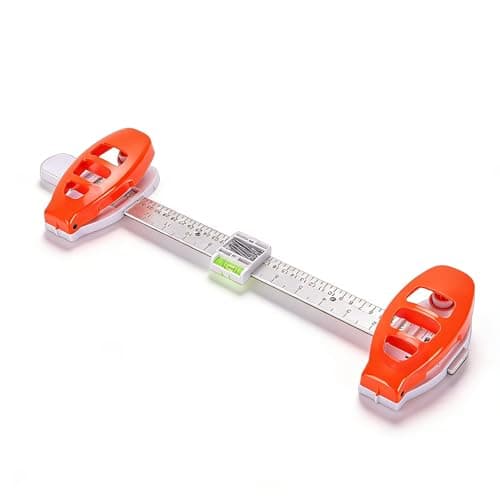 Luocute Picture Hanging Level Tool A positioning and alignment ruler with a built-in spirit level, designed for marking hook positions before you drill. It replaces the tape-and-pencil transfer step, which is the step where the two marks most often drift out of line. | Best measuring aid | |
| 5 |  OOK Monkey Hook Drywall Picture Hanger Rated at 35 lb on half-inch residential drywall and 50 lb on five-eighths commercial, installed by hand with no tools and leaving one pin-sized hole. Two of these is a genuinely high-capacity two-point hang in a wall with no stud where you need it. | Best drywall fixing for a pair | $17.97 · View on Amazon #ad How we’re funded · Price as of November 1, 2026 |
| 6 |  Command Sticky Nail Wire-Back Hanger (17048) Rated at 8 lb each with an adhesive base rather than a nail, and shaped for wire-back frames. Two of them give a renter the two-point hang described above without a single hole in the wall. | Best no-drill pair for a wired frame | |
| 7 | 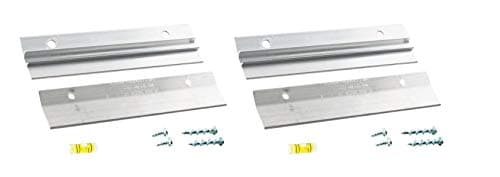 Hangman Heavy-Duty Mirror & Picture Hanger An interlocking French cleat in 100 lb and 200 lb bracket sets that spreads the load along an aluminum rail instead of into two points, and ships with wall-dog screws and a bubble level. This is the correct answer above roughly 50 lb rather than adding a third hook. | Best for anything too heavy for two hooks | $15.00 · View on Amazon #ad How we’re funded · Price as of November 1, 2026 |
What the second hook actually buys you
A single hook is faster and is the right answer for anything small. The moment the frame is wide, heavy, or somewhere people walk past it, the second hook earns its place.
| Problem | One hook | Two hooks |
|---|---|---|
| The frame goes crooked | It will - a single point lets the frame pivot every time it is knocked | It cannot pivot; the two points fix the angle |
| Load on the fixing | The full weight sits on one hook and one hole | Roughly half each, which is often what brings it inside the rating |
| Wide frames sagging on a wire | The wire pulls into a V and tilts the top of the frame off the wall | The wire stays nearly flat, so the frame sits closer to flush |
| Getting it level | Easy - the frame self-levels on the wire | Harder - both holes must be at the same height, which is the whole method below |
If your frame has a wire rather than fixed hangers, read sawtooth hanger versus picture wire first - the fitting on the back decides which of the two methods below applies.
How far apart the two hooks should be
Spacing is not critical to the nearest inch, but it is worth getting roughly right. Too close together and the frame still behaves like it is on one point. Too far apart and the hooks start to sit outside the frame’s own hanging hardware.
| Frame width | Hook spacing | Why |
|---|---|---|
| Under 16 in | One hook is enough | The lever arm is too short for meaningful tilt |
| 16-24 in | About 8 in apart | Roughly a third of the width - enough to stop rotation |
| 24-36 in | About 12 in apart | Keeps both hooks over solid frame rail rather than near the corners |
| 36 in and wider | About 16-18 in apart | At this width consider 16 in exactly, which lets both hooks hit studs |
Method one: two D-rings, the measure-and-transfer way
This is the precise method and the one to use when the frame has two fixed D-rings or two sawtooth hangers on the back. Nothing moves once it is hung, so both holes have to be right.
- Decide the center height. 57 inches from the floor to the center of the picture is the standard eye-level figure; how high to hang art covers when to depart from it, such as above a sofa or above a mantel.
- Measure the frame height and halve it. Add that half-height to your center height. That number is where the TOP of the frame will sit. Write it down.
- Measure the drop. With the frame face down, measure from the top edge of the frame to the top inside edge of each D-ring - the part the hook will actually bear on. Both should be the same; if they are not, that difference is why your pictures hang crooked.
- Subtract the drop. Top-of-frame height minus the drop is your hook line. Mark it on the wall.
- Measure the horizontal spacing on the frame, not on the wall. Measure the distance between the two D-rings on the back of the frame. Find the center of where the picture will go, then mark half that distance left and right of it on your hook line.
- Check the line is level before you drill. A spirit level across the two marks takes ten seconds and is the last point at which a mistake is free.
- Fix both hooks and hang. Lift the frame on, then check the frame itself with the level - not the hooks.
Method two: a wired frame on two hooks
A wire changes the arithmetic, because the drop is not fixed - the wire lifts when you put a hook under it. This is the method people most often get wrong by an inch or two.
- Pull the wire up as the hooks will. With the frame face down, hook two fingers under the wire at the two points where your hooks will sit, and pull up toward the top of the frame until the wire is taut.
- Measure the drop with the wire taut. From the top of the frame down to the highest point of the lifted wire. That is the real drop. Measuring the wire at rest will hang the picture one to three inches lower than you intended.
- Spread your fingers as far as the hooks will be apart. Pulling the wire up at two points spaced a foot apart gives a flatter wire and a smaller drop than pulling it up at one point. The measurement is only right if it matches the hook spacing you are actually going to use.
- Then follow steps 1, 2, 4, 6 and 7 of the D-ring method. The horizontal spacing is your choice rather than the frame’s, so use the table above.
One genuine advantage of the wire: it slides. If the two hooks end up a fraction of an inch off level, the frame can still be nudged straight afterward, which a pair of D-rings cannot be. That is the reason to prefer a wire on anything wide.
Weight, and what two hooks do not fix
Splitting the load across two fixings is real, but it is not unlimited, and the usual mistake is to assume two hooks double the capacity of whatever the wall itself can take.
- Two hooks roughly halve the load per fixing only if both are carrying. A frame hung on two hooks that are not level puts most of the weight on the lower one.
- Adhesive products do not work this way. 3M publishes a per-frame ceiling for Command picture hanging strips of 16 lb using four pairs of the large size - that is a total, not a per-strip figure to multiply. How much weight Command strips hold has the published table.
- Drywall capacity is set by the anchor, not the hook count. Two nails in bare drywall are still two nails in bare drywall. A drywall picture hanger such as the OOK Monkey Hook is rated at 35 lb on half-inch residential drywall, and two of those is a genuinely different proposition.
- Above roughly 50 lb, change system rather than adding hooks. A French cleat spreads the load along a rail instead of into two points, which is what mirrors and very large frames need.
For plaster, brick, tile or textured walls the fixing changes before the method does - plaster walls and brick each have their own hardware.
The five mistakes that cause a crooked two-hook hang
- Measuring the wire slack. The single most common one. Lift the wire taut, at the hook spacing you will use, before you measure the drop.
- Measuring from the floor instead of from the frame. Floors are not level and baseboards vary. Work down from your marked center height.
- Unequal D-rings. If the two D-rings are not screwed on at the same distance from the top, no amount of careful wall marking will hang the frame level. Check the frame before you check the wall.
- Levelling the hooks instead of the frame. Hooks can be perfectly level and the frame still crooked, because the hook profile puts the bearing point in a different place than the nail hole. Level the frame, then adjust.
- Drilling before checking for what is behind. Two holes is two chances to hit a cable or a pipe. Scan both marks, not just one.
How these picks were chosen
This is a method page, so the hardware below is chosen only for the job on it: putting two fixings on one level line and getting a frame onto them.
- It has to contain more than one hook. A two-hook hang needs matched pairs, which is why assortment kits beat single hangers here.
- The weight rating has to be published by the manufacturer. Nothing on this page carries an estimated figure.
- It has to suit an ordinary interior wall. Drywall first, with the no-drill options called out for renters.
- It has to be currently purchasable. Every item here was checked as live and in stock on Amazon before publication.
We have not bench-tested these against each other, and the verdicts below are specification-led rather than the result of our own load testing.
The picks in full
Each entry states what it is for, the specification that decides it, and who should skip it.
1. Best overall kit
KURUI 303Pcs Picture Hanging Kit
KURUI
A 303-piece assortment that includes the hooks, the hardware nails, sawtooth hangers, wire, D-rings and a small level - which is every component a two-hook hang needs from one box, including the frame-side hardware most kits leave out.
- Pieces
- 303-piece assorted kit
- Contents
- Hooks, hardware nails, sawtooth hangers, wire, D-rings and a level
- Construction
- Metal hooks
- Use
- Frame and canvas mounting
The spec that decides it: 303 pieces; hooks, nails, sawtooth hangers, wire, D-rings and a level included.
Skip it if: You only need one specific hook - an assortment kit is the expensive way to buy a single fixing.
2. Best simple assortment
Amazon Basics Picture Hanging Hardware Assortment Kit, 220 Piece
Amazon Basics
A 220-piece brass assortment that covers the common hook and nail sizes without the extras. The right purchase when you already own a level and a tape and just want matched pairs of hooks on hand.
- Pieces
- 220-piece assortment
- Finish
- Brass
- Contents
- Assorted picture hanging hardware
- Use
- General picture and frame hanging
The spec that decides it: 220-piece assortment, brass finish, general picture and frame hanging.
Skip it if: Your frames have no hanging hardware on them yet - this kit is wall-side, not frame-side.
#ad How we’re funded · Price as of November 1, 2026
3. Best for converting a frame to two-point hanging
COMFRTX D-Ring Picture Hangers with Screws Kit, 140 Piece
COMFRTX
140 pieces covering 40 single-hole and 20 double-hole D-rings with 80 screws, in two sizes. This is what you buy when a frame arrived with one sawtooth in the middle and you want two fixed points instead - the conversion that makes the whole method possible.
- Contents
- 40 single-hole and 20 double-hole D-rings with 80 screws
- Sizes
- Two D-ring sizes in one kit
- Fits
- Frames, mirrors and canvases
- Mounting
- Screws into the frame back rails
The spec that decides it: 40 single-hole and 20 double-hole D-rings, 80 screws, two sizes.
Skip it if: The frame back is thin plastic or hardboard - a D-ring screw needs solid rail to bite into.
#ad How we’re funded · Price as of November 1, 2026
4. Best measuring aid
Luocute Picture Hanging Level Tool
Luocute
A positioning and alignment ruler with a built-in spirit level, designed for marking hook positions before you drill. It replaces the tape-and-pencil transfer step, which is the step where the two marks most often drift out of line.
- Type
- Frame positioning and alignment ruler
- Built in
- Spirit level
- Material
- ABS
- Use
- Marking hook positions before drilling
The spec that decides it: Frame positioning and alignment ruler with a built-in level; ABS body.
Skip it if: You hang pictures twice a year - a tape measure, a pencil and a spirit level do the same job.
5. Best drywall fixing for a pair
OOK Monkey Hook Drywall Picture Hanger
OOK
Rated at 35 lb on half-inch residential drywall and 50 lb on five-eighths commercial, installed by hand with no tools and leaving one pin-sized hole. Two of these is a genuinely high-capacity two-point hang in a wall with no stud where you need it.
- Rated weight
- 35 lb on 1/2 in residential drywall; 50 lb on 5/8 in commercial drywall
- Wall types
- Hollow drywall only — not studs, not plaster over lath, not masonry
- Tools
- None — push and twist by hand
- Wall damage
- One pin-sized hole
The spec that decides it: 35 lb on 1/2 in drywall, 50 lb on 5/8 in; no tools; one pin-sized hole each.
Skip it if: The wall is plaster over lath, masonry or a stud - the Monkey Hook needs a hollow drywall cavity behind it.
#ad How we’re funded · Price as of November 1, 2026
6. Best no-drill pair for a wired frame
Command Sticky Nail Wire-Back Hanger (17048)
3M Command
Rated at 8 lb each with an adhesive base rather than a nail, and shaped for wire-back frames. Two of them give a renter the two-point hang described above without a single hole in the wall.
- Rated weight
- 8 lb
- Frame fitting
- Wire-back frames
- Wall damage
- Adhesive base — no nail into the wall
- Removal
- Stretch-release tab
The spec that decides it: 8 lb rated; for wire-back frames; adhesive base; stretch-release removal.
Skip it if: The wall is textured or freshly painted - adhesive bases need a smooth, fully cured surface.
7. Best for anything too heavy for two hooks
Hangman Heavy-Duty Mirror & Picture Hanger
Hangman Products
An interlocking French cleat in 100 lb and 200 lb bracket sets that spreads the load along an aluminum rail instead of into two points, and ships with wall-dog screws and a bubble level. This is the correct answer above roughly 50 lb rather than adding a third hook.
- Rated weight
- 100 lb and 200 lb bracket sets, depending on length
- System
- Interlocking French cleat — two aluminum rails
- Tools
- Screwdriver; includes wall-dog screws and a bubble level
- Wall damage
- Screw holes — this one is not renter-reversible
The spec that decides it: 100 lb and 200 lb bracket sets; interlocking aluminum cleat; screws and level included.
Skip it if: You are renting - this one goes in with screws and is not reversible without filler and paint.
#ad How we’re funded · Price as of November 1, 2026
Common questions
How far apart should two picture hooks be?
About a third of the frame width. That puts hooks roughly 8 inches apart on a 24 inch frame and roughly 12 inches apart on a 36 inch frame. On wide frames, aim for exactly 16 inches where you can, because US wall studs are commonly 16 inches on center and that spacing gives you a chance of hitting two of them.
How do you measure where to put two hooks?
Work downward from the top of the frame, not upward from the floor. Mark your intended center height on the wall, add half the frame height to get where the top of the frame will sit, then subtract the drop from the top of the frame to the hanging point. That result is your hook line. Mark both hooks on that one line at the spacing measured from the back of the frame.
Why does my picture still hang crooked on two hooks?
Usually because the two hanging points on the frame itself are not at the same height. Check the D-rings or sawtooth hangers on the back before blaming the wall marks. The other common cause is levelling the hooks rather than the frame - a hook's bearing point sits in a different place than its nail hole, so two level nails can still produce a crooked picture.
Do two hooks double how much weight a wall can hold?
No. Two hooks roughly halve the load on each fixing, which often brings a heavy frame inside what each fixing is rated for, but the wall's capacity is set by the anchor type rather than by how many you use. Adhesive products in particular publish a per-frame ceiling that is not multiplied by adding more - 3M rates Command picture hanging strips at 16 lb per frame using four pairs of the large size.
How do you measure the drop on a wired frame?
Lift the wire taut first. Hook two fingers under it at the two points where your hooks will actually sit, pull up toward the top of the frame, and measure from the top edge down to the highest point of the lifted wire. Measuring the wire slack is the single most common reason a picture ends up one to three inches lower than intended.
Can you hang a picture on two hooks without drilling?
Yes, within the published ratings. A pair of adhesive wire-back hangers rated at 8 lb each gives a two-point hang with no holes, provided the wall is smooth, clean and fully cured paint. Above that, a drywall hanger such as the OOK Monkey Hook installs by hand and leaves a single pin-sized hole per fixing, which is closer to no-drill than to drilling.
Should I use two hooks or a picture ledge?
Two hooks if the picture is staying put, a ledge if it is not. A ledge puts two screws in the wall once and then lets you rearrange, swap or add frames without further holes, which suits a wall you expect to change. Two hooks give a flatter, more permanent result and are the right choice for a single piece in its final position.
Sources for the figures on this page
Read next
- Sawtooth Hanger vs Picture Wire
Flush versus adjustable: what a sawtooth, a wire and a pair of D-rings each do to a hung frame, and the rated adhesive hanger for each.
- How High to Hang Art
The 57-inch gallery standard, the hook-position arithmetic, and the exceptions for sofas, beds, dining rooms and stairs.
- Hanging Pictures Without Studs
Published ratings for every fixing that works in hollow drywall with no stud, from 4 lb adhesive strips to a 200 lb no-stud hanger.
- How Much Weight Can Command Strips Hold?
Published per-pair and per-frame weight ratings for every strip size, the ceiling by frame size, and the three things that make a correctly rated strip fail anyway.
- Hanging a Heavy Mirror Without Drilling
Why adhesive is out at mirror weights, the no-stud plates rated 100-200 lb, and when to lean it instead.
- Gallery Wall Layouts and Spacing
The 2-3 inch gap rule, the 57 inch group center, and how to size the whole arrangement to the furniture below it.
- Best Picture Frames for a Living Room
Frames chosen for viewing distance, sofa-width scale and daylight glare, from a single oversize statement frame to a mixed set, a ledge and a no-drill option for renters.