How to Flatten a Rolled Poster
Forty-eight hours under weight. That is the method, and nearly every faster alternative damages the print.
By Janet H. · Published

Unroll it face up on a flat surface, lay clean paper over it, weight the whole area evenly with books, and leave it 48 hours. That is the method. It is slow and it works, and almost every faster alternative causes damage.
Never use heat. An iron, a hairdryer or a radiator sets the curl permanently and can cook the inks — it is the single most common way people destroy a poster while trying to prepare it.
Disclosure: Hang & Hue earns commission from qualifying purchases made through the links on this page, at no extra cost to you. As an Amazon Associate we earn from qualifying purchases. It does not change which products we recommend or the order they appear in — read our editorial policy and full affiliate disclosure.
Quick picks
Tap any row to jump to the full write-up.
| # | Product | Best for | Price |
|---|---|---|---|
| 1 | 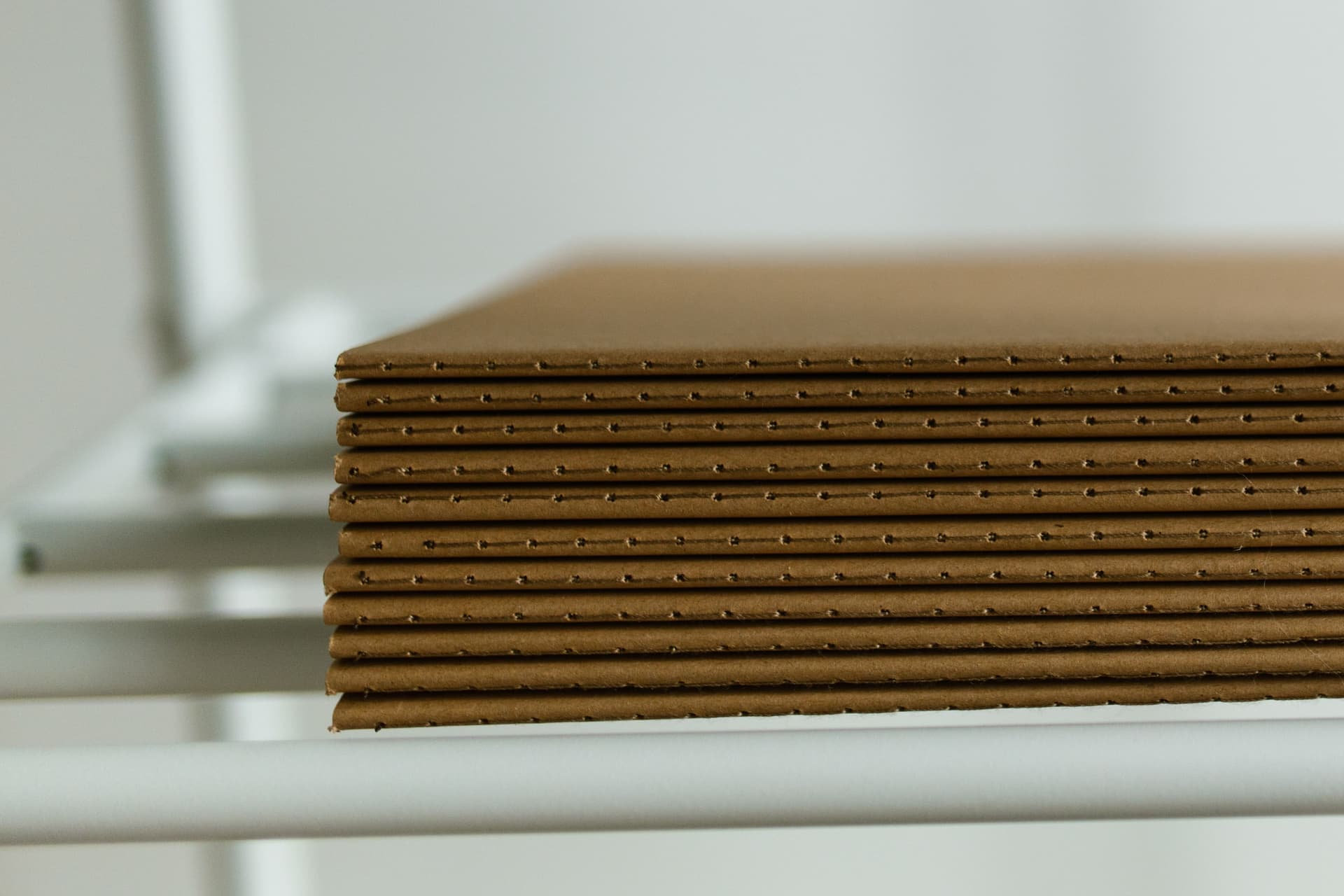 Golden State Art Pre-Cut Mat Board Acid-free board is what you weight a poster against, and it is the mat you frame it with afterwards. Two jobs, one purchase. | Best flattening surface and mat in one | |
| 2 |  Americanflat Poster Frame Shatter-resistant plexiglass at the standard poster sizes, and light enough to hang on adhesive strips. | Best frame once it is flat | |
| 3 | Golden State Art Poster Frame Stocks the commercial poster size that a 24x36 frame leaves a gap around, which is the most common sizing mistake at this point in the process. | Best for 22.375x34 posters | |
| 4 |  Command Poster Strips (17204) Rated 1 lb and designed to sit flat under paper, which holds a flattened poster against the wall without bulging through it. | Best if you will not frame it |
The method
- Unroll it face up on a clean, flat, hard surface. Carpet is not flat enough and it prints its own texture through thin paper.
- Let it relax for an hour first before adding weight. Forcing a tight roll flat immediately creases it at the curl.
- Lay clean paper over the whole face. Plain white paper, baking parchment or acid-free tissue. Never newsprint — it transfers ink onto the print.
- Weight the entire area evenly. A sheet of board or a stack of large books covering the full surface, not four books at the corners.
- Wait 48 hours. Twelve is not enough; the paper fibers need time to take their new set.
When 48 hours is not enough
| Problem | Fix |
|---|---|
| Still curling at the edges after 48 hours | Give it another 48. Tightly rolled or heavy stock simply takes longer. |
| Shipped in a tight tube for months | Re-roll it loosely the OPPOSITE way for a few hours first, then flatten under weight. |
| A hard crease from packaging | It will not come out. Frame it so a mat covers the crease, or accept it. |
| Very dry, brittle paper | Add humidity, not heat: a day in a bathroom after a shower, not touching any wet surface. |
| Wavy rather than curled | That is moisture cockling, not roll memory. It needs even weight over a longer period and a dry room. |
Getting it into a frame
Flatten first, then frame. A curled poster forced behind glazing bows visibly and puts pressure on the frame’s corners.
Mount it with archival hinging tape along the top edge only, or with acid-free photo corners, so it hangs freely and can expand with humidity. Never tape it down on all four sides — that is what causes the permanent ripple people blame on the poster. Framing a poster without damage.
Then pick the frame: poster frames, or the 24x36 roundup if you already know the size. Measure the poster first — a lot of commercial posters are 22.375x34 rather than 24x36.
Storing posters you are not hanging yet
Flat, if you have the space: between two sheets of acid-free board, somewhere dry and dark. That way there is no curl to remove later.
If you must roll, roll face out around a wide tube — at least three inches in diameter. Face-out rolling puts the printed surface on the outside of the curve, in tension rather than compression, which is far gentler on the ink layer.
The picks in full
Each entry states what it is for, the specification that decides it, and who should skip it.
1. Best flattening surface and mat in one
Golden State Art Pre-Cut Mat Board
Golden State Art
Acid-free board is what you weight a poster against, and it is the mat you frame it with afterwards. Two jobs, one purchase.
- Cut
- Pre-cut bevel opening, standard step-down sizes
- Material
- Acid-free board with backing and a clear sleeve on most packs
- Sizes
- Common pairs such as 11x14 matted to 8x10
- Packs
- Singles and multi-packs
The spec that decides it: Acid-free board with pre-cut bevel openings and backing.
Skip it if: You only need to flatten it — plain white paper and books cost nothing.
2. Best frame once it is flat
Americanflat Poster Frame
Americanflat
Shatter-resistant plexiglass at the standard poster sizes, and light enough to hang on adhesive strips.
- Sizes
- 18x24, 20x30, 24x36 and other poster sizes
- Glazing
- Shatter-resistant plexiglass — light enough for adhesive strips
- Matting
- Optional mat on several sizes
- Orientation
- Vertical or horizontal
The spec that decides it: Shatter-resistant plexiglass at 18x24, 20x30 and 24x36.
Skip it if: Your poster is 22.375x34 — check the listing covers that exact size.
3. Best for 22.375x34 posters
Golden State Art Poster Frame
Golden State Art
Stocks the commercial poster size that a 24x36 frame leaves a gap around, which is the most common sizing mistake at this point in the process.
- Sizes
- Standard poster sizes including the 22.375x34 commercial poster size
- Glazing
- Acrylic on the large sizes
- Matting
- Matted options on several sizes
- Orientation
- Vertical or horizontal
The spec that decides it: Covers 22.375x34 as well as the standard poster sizes.
Skip it if: Your poster is a true 24x36 — the mainstream frames are easier to find.
4. Best if you will not frame it
Command Poster Strips (17204)
3M Command
Rated 1 lb and designed to sit flat under paper, which holds a flattened poster against the wall without bulging through it.
- Rated weight
- 1 lb
- Best for
- Unframed paper posters and prints
- Wall types
- Painted drywall and finished surfaces
- Removal
- Stretch-release tab
The spec that decides it: 1 lb rating with a low profile intended for bare paper.
Skip it if: The poster matters to you — unglazed paper on a wall fades and creases.
Common questions
How do you flatten a rolled poster?
Unroll it face up on a flat hard surface, let it relax for an hour, lay clean paper over the whole face, weight the entire area evenly with books or board, and leave it 48 hours. Never use heat.
Can you iron a poster to flatten it?
No. Heat makes paper temporarily flexible and then sets whatever shape it cools in — usually the curl you were trying to remove, now permanent. It can also soften and lift inkjet pigment and make coated stock cockle.
How long does it take to flatten a poster?
48 hours under even weight for most posters. Tightly rolled or heavy stock can take another 48. Twelve hours is not enough — the paper fibers need time to take their new set.
Does rolling a poster the other way work?
Yes, if you do it gently. Re-roll it loosely at a large diameter with no tension, leave it a few hours, then flatten under weight. A tight reverse roll simply creates a curl in the other direction.
How should you store posters?
Flat, between two sheets of acid-free board, somewhere dry and dark. If you must roll, roll face out around a tube at least three inches in diameter — that puts the printed surface in tension rather than compression.
Sources for the figures on this page
Read next
- Framing a Poster Without Damage
Reversible mounting for posters, the frameless options, and how to hang the result without putting holes in the wall.
- Best Poster Frames
Poster frames by size coverage and glazing weight, including the awkward 22.375x34 commercial size.
- Best 24x36 Poster Frames
24x36 frames compared on glazing weight and hanging method, plus the poster size that is not 24x36.
- Where to Buy Art Prints
The five places art prints come from, what each is good for, and how to tell licensed stock from an artist's work.
- How to Mat a Print
Working out the opening, choosing acid-free board, and the two mounting methods that do not damage the print.
- Poster vs Art Print
Paper stock, printing method, longevity and framing treatment — how to tell the two apart and which you need.