Wall Mural vs Wallpaper
The difference is not the picture. It is whether the design repeats — and that single property decides how you measure, what a mistake costs, and whether you can buy more.
By Janet H. · Published
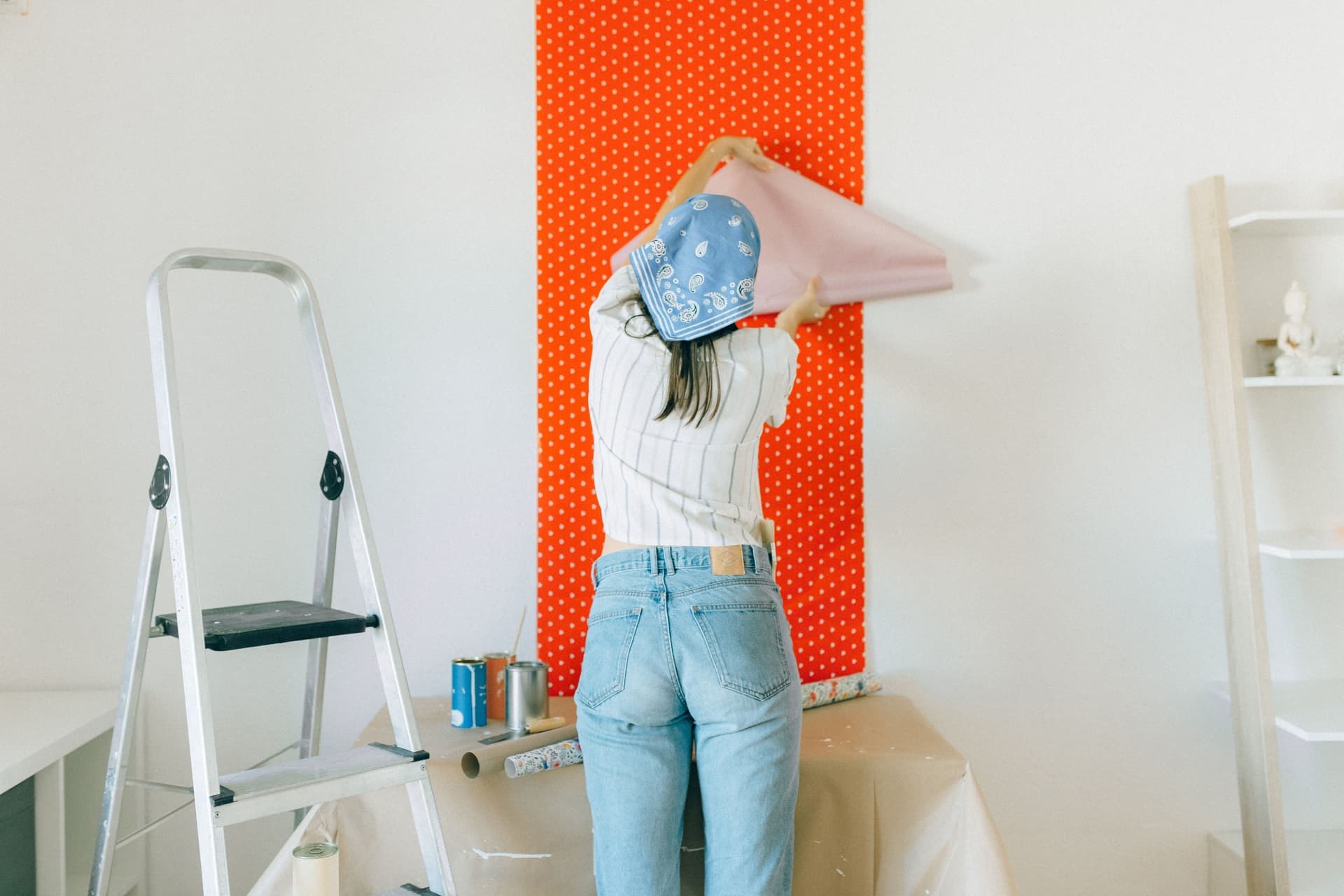
Choose wallpaper unless you specifically want one large picture. Wallpaper repeats, so you can buy another roll, trim a mistake and paper any size of wall. A mural is printed as a set of panels sized to one wall and nothing about it is recoverable if the measurement is wrong.
For renters both exist in peel-and-stick form, and that is the version to buy — the manufacturers state these are designed to be removable, which is the only property that matters when the lease ends.
Disclosure: Hang & Hue earns commission from qualifying purchases made through the links on this page, at no extra cost to you. As an Amazon Associate we earn from qualifying purchases. It does not change which products we recommend or the order they appear in — read our editorial policy and full affiliate disclosure.
Quick picks
Tap any row to jump to the full write-up.
| # | Product | Best for | Price |
|---|---|---|---|
| 1 | 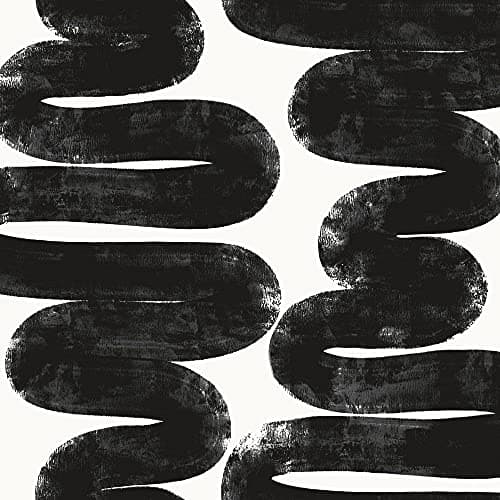 Tempaper Removable Peel and Stick Wallpaper The only pick here whose published range covers wallpaper, wall murals and decals, so the same brand answers the question whichever way you decide. Self-adhesive and designed to be removable. | Best overall | |
| 2 |  RoomMates Peel and Stick Wallpaper A self-adhesive roll in a repeating pattern, which is the forgiving format: buy another roll, trim a mistake, paper a second wall later. | Best for a repeat pattern | |
| 3 | RoomMates Peel and Stick Wall Decals Shapes rather than a full surface, removable and repositionable with no residue stated by the manufacturer. The way to test whether you actually want a patterned wall. | Best low-commitment version |
What actually separates them
Both are printed material you stick to a wall. The structural difference is the repeat.
| Wall mural | Wallpaper | |
|---|---|---|
| Design | One large image, continuous across the wall | A pattern that repeats at a fixed interval |
| Sold as | A set of panels sized to your wall dimensions | Rolls of a standard width and length |
| Ordering | Measure the wall first; the order is built to that size | Buy rolls by area, round up |
| Mistake cost | High — a panel cannot be replaced from stock | Low — cut another length off the roll |
| Buying more later | Usually not possible as a match | Usually possible, same pattern and batch permitting |
| Partial walls | Awkward — the image is composed for the full wall | Fine — a repeat tolerates any edge |
| Best for | A feature wall that is the room's subject | Texture and color across one or several walls |
Measuring, and why murals punish it
Wallpaper forgives measurement error because the pattern repeats and the roll is longer than the wall. A mural does not. The panels arrive printed at a size derived from the numbers you supplied, and a wall measured two inches short leaves the image two inches short.
Measure the wall at three heights and three widths and use the largest number from each — walls are rarely square and plaster is rarely flat. Add the overlap the manufacturer specifies on top of that. Then subtract nothing: trim at the wall, not on the order form.
The renter's version of both
Traditional pasted wallpaper is a landlord conversation. Peel-and-stick is not, and both murals and wallpaper exist in that form. The manufacturers are explicit that the self-adhesive products are designed to be removable, and that they are intended for smooth painted walls.
That surface requirement is the real constraint, and it is the same one that governs adhesive hanging hardware: orange peel, knockdown and popcorn textures do not take self-adhesive material, because the adhesive only contacts the high points. Hanging on textured walls covers that problem for frames, and the physics is identical here.
Two further renter notes. Fresh paint needs to cure before anything self-adhesive goes onto it, and peeling anything off an uncured wall takes the paint with it. And a rented wall that is already papered is not a candidate — see hanging on wallpaper.
The third option nobody costs out
A large framed print or a set of framed prints does much of what a mural does — it makes one wall the subject — and it comes off the wall in an afternoon, survives a move, and can be rehung somewhere else. For a renter, that is a serious argument.
Covering a whole wall in print is the expensive version of this. Covering the useful part of it with one large piece or a planned group is the cheap one, and it is the comparison made in gallery wall versus one large piece. If the aim was to cover a wall cheaply rather than to make a statement, affordable art prints is the cheaper route by a wide margin.
Decals sit between the two: a shape rather than a full surface, repositionable, and the lowest commitment of anything here. Wall decals versus wallpaper compares those directly.
Applying either one without bubbles
The method is the same for both and the failure is always the same: air trapped behind the sheet. Work from the top, peel the backing a foot at a time rather than all at once, and smooth from the center outward with a plastic squeegee or a credit card before peeling the next foot.
Wash the wall first with plain water and let it dry fully. Dust is what makes self-adhesive material lift at the edges three weeks later, and it is invisible until then. If a bubble survives anyway, lift the nearest edge and re-lay rather than pricking it — peel-and-stick material is designed to be repositioned, which is the one advantage it has over paste.
The picks in full
Each entry states what it is for, the specification that decides it, and who should skip it.
1. Best overall
Tempaper Removable Peel and Stick Wallpaper
Tempaper
The only pick here whose published range covers wallpaper, wall murals and decals, so the same brand answers the question whichever way you decide. Self-adhesive and designed to be removable.
- Application
- Self-adhesive roll
- Range
- Wallpaper, wall murals and decals
- Removal
- Designed to be removable
- Surfaces
- Smooth painted walls
The spec that decides it: Self-adhesive roll; range covers wallpaper, wall murals and decals; designed to be removable.
Skip it if: Your walls are textured — no self-adhesive covering bonds to orange peel or knockdown.
2. Best for a repeat pattern
RoomMates Peel and Stick Wallpaper
RoomMates
A self-adhesive roll in a repeating pattern, which is the forgiving format: buy another roll, trim a mistake, paper a second wall later.
- Application
- Self-adhesive roll
- Removal
- Removable
- Surfaces
- Smooth painted walls
- Origin
- Made in the USA
The spec that decides it: Self-adhesive roll, removable, for smooth painted walls; made in the USA.
Skip it if: You want one continuous image across the wall — that is a mural, not a repeat.
3. Best low-commitment version
RoomMates Peel and Stick Wall Decals
RoomMates
Shapes rather than a full surface, removable and repositionable with no residue stated by the manufacturer. The way to test whether you actually want a patterned wall.
- Application
- Peel and stick — no paste, no tools
- Removal
- Removable and repositionable; manufacturer states no sticky residue
- Surfaces
- Smooth painted walls; not for textured walls
- Compliance
- Manufacturer states CPSIA compliance
The spec that decides it: Removable and repositionable; manufacturer states no sticky residue; CPSIA compliant.
Skip it if: You want full coverage — decals leave the wall color visible between them, by design.
Common questions
What is the difference between a wall mural and wallpaper?
Wallpaper is a pattern that repeats at a fixed interval and is sold by the roll, so any wall size can be covered and more can usually be bought later. A wall mural is a single composed image printed as a set of panels sized to one specific wall, which means it has to be measured before ordering and cannot be extended afterwards.
Is a wall mural harder to hang than wallpaper?
The application technique is the same, but the tolerance is not. Wallpaper repeats, so a misaligned length can be trimmed and the next one started fresh. A mural's panels only line up in one position and in one order, and a panel applied crooked cannot be replaced from stock.
Can renters use peel-and-stick murals and wallpaper?
Both exist in self-adhesive form and the manufacturers state they are designed to be removable. The condition is the wall surface: these products are intended for smooth painted walls, and textured finishes such as orange peel or knockdown do not give the adhesive enough contact area to hold.
How do you measure a wall for a mural?
Measure the width at three heights and the height at three widths, and use the largest figure from each — walls are rarely square. Add whatever overlap the manufacturer specifies, and trim at the wall rather than reducing the order. Mark the positions of switches, outlets and fittings before choosing an image so nothing lands on the subject.
Is a mural cheaper than framed art?
Not usually, and the comparison is rarely like for like. Covering a whole wall in printed material costs more than a single large framed print or a planned group of smaller ones, and the framed version comes off the wall in an afternoon and moves house with you. A mural is the right purchase when the wall itself is meant to be the subject.
Sources for the figures on this page
Read next
- Wall Decals vs Peel-and-Stick Wallpaper
Coverage, effort, cost and removal risk compared — and the wall conditions both formats need to work at all.
- Best Peel-and-Stick Wall Art
Decals, panels and removable wallpaper compared, plus the wall conditions that decide whether any of it works.
- Gallery Wall vs One Large Piece
Gallery wall or one big artwork, compared on cost, fixing count, how forgiving each is to hang, and what each does to a small room.
- Best Affordable Art Prints
Why standard sizing is the real saving, where to buy coordinated sets, and what makes cheap art look cheap.
- Hanging on Textured Walls
Why adhesive fails on orange peel, knockdown and popcorn — and the three fixings that hold on a textured wall.
- Hanging Pictures on Wallpaper
Why adhesive is excluded on papered walls, the three fixings that work instead, and how to frame art so it reads against a pattern.